
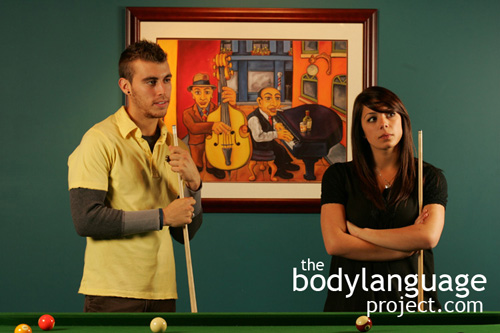
Depending on the context, arm crossing might mean someone is physically cold – or emotionally cold.
Arms in the non-verbal world are shields. Folding the arms across the body is like cutting off access to our core that houses our vital organs; our heart and lungs. Just like putting up a shield, the arms protect us, not only from physical attack which can elicit closed body language, but it also protects us from unwanted outside views which we do not agree with. Therefore, having the arms across the chest can mean that either a physical threat or emotional threat is present. Arms crossed in a meeting or during a conversation, means that the person is defensive, negative, uncertain and insecure. Naturally, what is being asked of them will be met with disagreement.
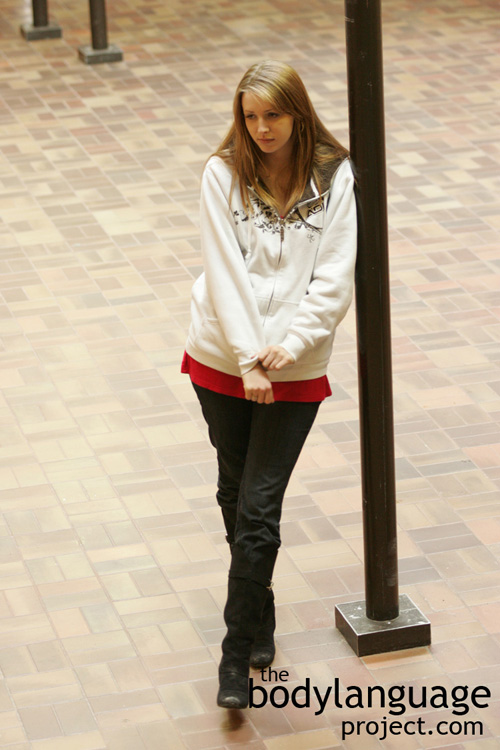
An abbreviated arm cross where the hand seems to perform a necessary task. In reality, this person feels uncomfortable and is shielding themselves.
While most closed body language means that a negative attitude is present, context permitting, there exist varying degrees. For example, full arm crossing accompanied by expressionless faces, a tense, rigid, or hostile posture with limbs that appear frozen runs the gambit of rejection. Tentative closed body language where only some blocking is happening will show as semi-relaxed body language, possible boredom, a neutral face and moderate movement of the arms and hands. In the first case, where closed language is extreme, getting any kind of agreement is unlikely. The second set of postures says that there’s a possibility of forming an agreement. So rather than depicting “no”, some closed body language says “Maybe” or “I’ll think about it.”
Opened and closed body language is a matter of degree. Language that has no closed body positions says “yes” some closed means “maybe” and a lot means “no.” This is highly useful especially if you wish to sway a target.
Here are some examples of abbreviated arm crossing:
______________________________________________________________________________________________
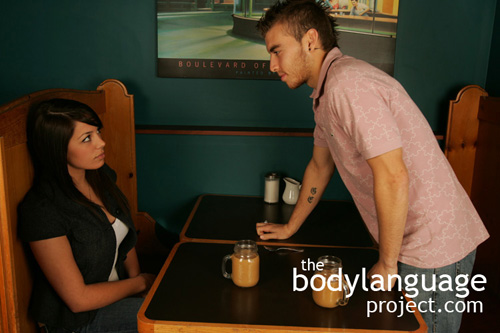
A hidden arm cross showing disagreement and withdrawal.
[ONE] Resting one arm straight out onto the table to the front and placing the opposite hand on the wrist or forearm of the other.
______________________________________________________________________________________________
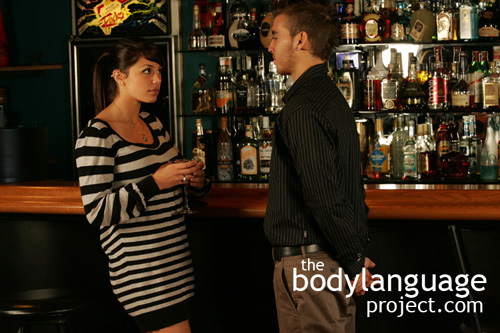
The coffee cup barrier – even drinks can fudge as a shield. To appear open, simply drop the drink to your side or set it down.
[TWO] Holding a drink in one hand with the arm perpendicular to the body (parallel the table) with or without applying weight to the arm.
______________________________________________________________________________________________
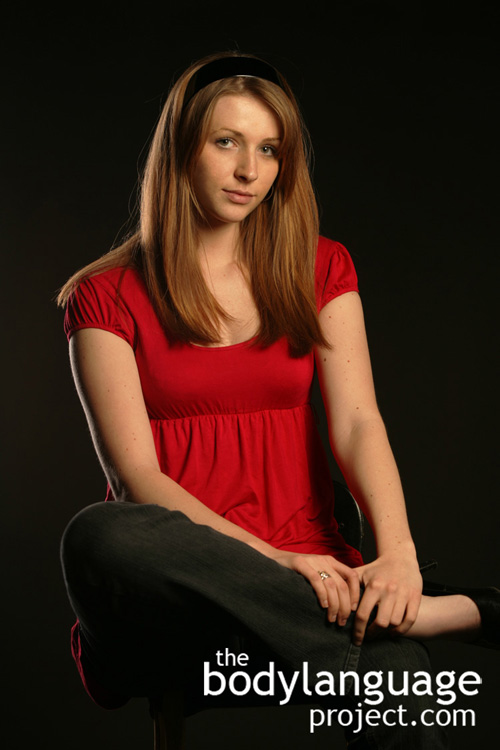
The ‘figure four leg’ lock – note the leg forms the 4 shape with hands locking it in.
[THREE] Crossing one leg over the knee of the other and holding the ankle to lock it in.
______________________________________________________________________________________________
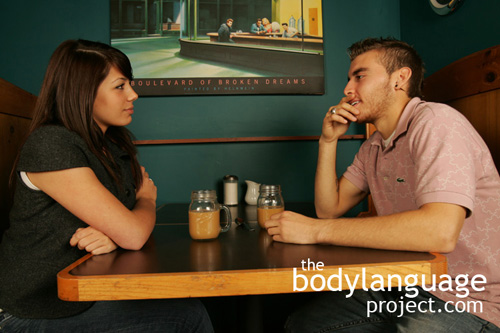
It looks like the conversation is going well, but the arms are being gripped showing negative thoughts.
[FOUR] Full self embrace where the arms are unlocked but held together parallel to the body.
______________________________________________________________________________________________
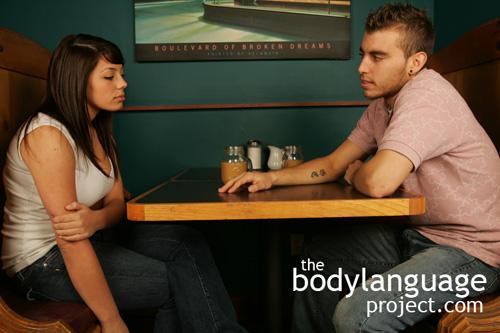
Another version of an arm cross for defense.
[FIVE] The opposite hand reaches over the body to grab the elbow or shoulder of the opposite arm.
______________________________________________________________________________________________
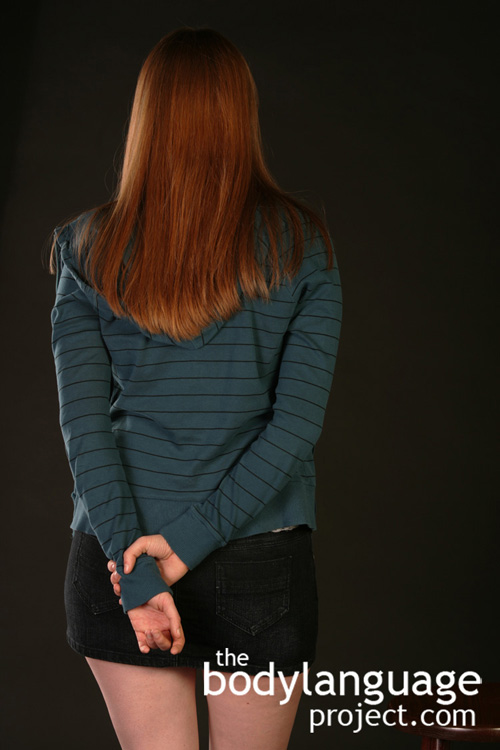
It reminds us of Mom keeping us safe.
[SIX] Subtle arm crossing where the hand grabs the wrist of the opposite side.
______________________________________________________________________________________________