
Women Wear More Makeup When Meeting Attractive People
Christopher Philip
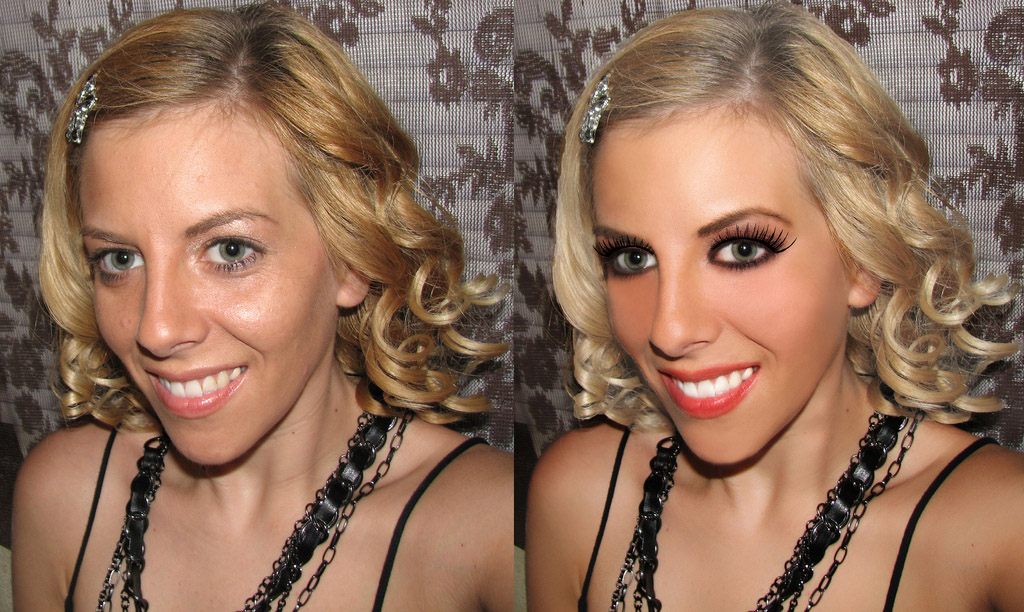 Certain immutable factors make the human face more attractive. Typically, attractive male and female faces tend to have high eyebrows, large pupils, large eyes, small noses, prominent cheekbones and narrow cheeks. They represent a combination of facial expressiveness, sexual maturity and neoteny.
However, additional factors can influence how the immutable face is perceived which woman at least, can control directly including makeup such as cosmetics applied to the face, and wardrobe such as clothing, jewelry, and other adornments. These are neither fixed to a person nor a disguise of the real self. Rather, these are indicators of the goals people wish to achieve through communication with others as well as the as the likelihood of attaining certain rewards.
This being the case, what factors play into the decision to adorn one’s self in a particular way over another? Does the potential viewer of the self matter when deciding how to apply make-up or wear attractive clothing?
The Current Research
Researcher Pamela Regan, California State University-Los Angeles believes this to be the case – that is, women care whom is about to view them and that they adjust their use of cosmetics to reflect their intentions. As such, she devised a study looking at the level of make-up and its quality with respect to the type of person women expected to meet.
Subjects were ostensibly told they were to meet with a stranger over a 15-minute videotaped interview to measure “initial encounters between strangers.” They were then photographed and then offered a photograph of the unknown candidate they were to meet in the following encounter. This person they were to meet was either an attractive women, unattractive woman, attractive man or unattractive man. As the participant was busy evaluating the image of their potential meeting partner, two confederates evaluated the cosmetic use of the participants.
Upon return to the anticipated meeting, independent raters again evaluated the use of cosmetics. They coded for the amount and type of makeup worn: lipstick/lip gloss,
mascara, eye shadow, eyeliner, foundation/powder, blush, and fingernail polish.
The results showed that the sex and physical attractiveness of the target influenced the amount of makeup used by women. Women who anticipated interacting with an attractive target of either sex increased their use of cosmetics. However, women who expected to meet an unattractive man changed their use of makeup by significantly decreasing the use of makeup used. The only time women did not change their use of makeup was when they expected to meet and unattractive female target.
Discussing The Findings
It is interesting that the target of the meeting matter significantly. Most interesting is that women cared less about their appearance in a predictable way. When meeting an unattractive man, which they presumably did not wish to impress, they used significantly less makeup. However, apparently, women care most about the opinions of men and women who are attractive. In other words, women were motivated to impress the attractive women likely to stave off the possible negative feelings from inadequacy. The behaviour says that women perceive themselves to be in direct competition with other women. While the results were the same in light of meeting attractive men, that is women also improved their makeup, this effect is due to an entirely different process. Here, women care about impressing her attractive male partners rather than compete against him. However, in both situations, she avoids the negative effects of being poorly judged.
This shows that attractive women and attractive men drive women toward objectification through use of make-up. Unattractive men influenced women to downplay their attractiveness and unattractive women, perceived as no threat to self-esteem, had a neutral effect on use of cosmetics.
As an aside, if a woman wishes to escape the clutches of objectification and shift their focus away from the urge to focus on the shallow self and its appearance, one should surround themselves with unattractive men as they will be least likely to elicit the desire to look presentable!
Additionally, and as part of the experimental protocol, subjects reported greater perceived attributes of the more attractive targets. In fact they rated the highly attractive targets as smarter, kinder, warmer, more intelligent, more sociable, and so forth.
Thus, it can be assumed that the desire to meet one’s own ascribed expectations of beauty, that is, that it predicts positive attributes, is what drives the subject’s motivation to boost their perceived attractiveness. In other words, they want to look good in light of their audience, so they will rate them as “good.”
Image Credit: Courtney Rhodes
Resources
Regan, Pamela C. Cinderella Revisited: Women’s Appearance Modification as a Function of Target Audience Sex and Attractiveness. Social Behavior and Personality. 2019. 39(4): 563-576. DOI 10.2224/sbp.2019.39.4.563