
Do You Wanna Fight? – Nonverbal Cues Believed To Indicate Violence
Christopher Philip
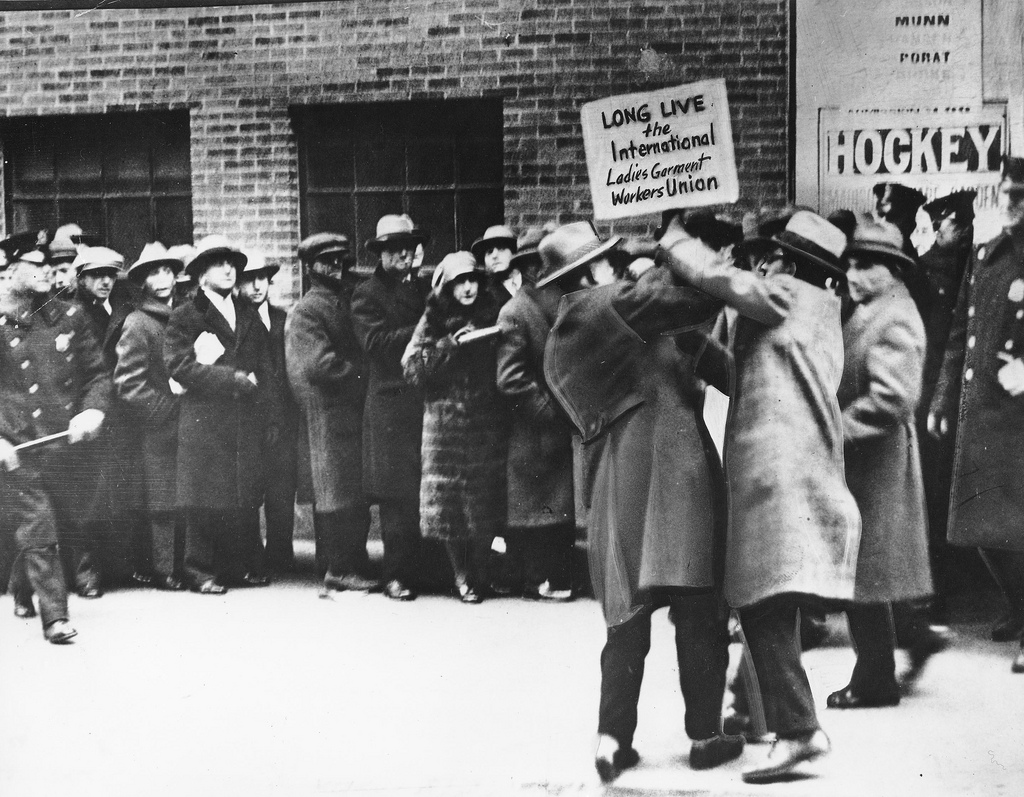 Researchers Richard Johnson and Jasmine Aaron, University of Toledo sought to discover the types of nonverbal postures and gestures that people most commonly ascribe to immanent risk of violence.
We know from observation that animal species commonly use nonverbal cues to communicate threats of violence.
“Animals make sounds, change color, puff up their bodies, or move about in a particular manner,” say the researchers in their paper. “These nonverbal displays of warning to potential rivals and predators are biological in origin.”
However, what cues exist in humans that tell others to watch out?
The current study had subjects read a written scenario which went as follows: “Imagine that you are in a verbal argument with another adult acquaintance. At this point, the argument is only verbal in nature, but you both strongly disagree with each other. You are both becoming very angry. Below are a number of behaviors you might witness in the person with whom you are arguing. For each of these behaviors, please indicate on a scale from one to seven how concerned you would be that the other person is about to become physically violent…”
From there the study listed empirically listed cues from other studies.
They included: frowning, yelling, crying, sweating, increasing respiration, making verbal threats, clenching hands, violating personal space, and tensed posture.
The list also contained non-empirically cited cues listed online including: removing unnecessary clothing, blinking eyes, tense jaw muscles, flushed face, hands on hips, exaggerated hand gestures, stretching arms or shoulders, stretching neck, glancing around, hands in pockets, pacing, staring in the eyes, avoiding eye contact, and taking a boxer’s or fighter’s stance.
The subjects found four main cues to be uniformly associated with impending violence including:
– Assuming a boxer’s stance
– Invading personal space
– Clenched hands and
– Threatening remarks
The cues least associated with violence included:
– Crying
– Rapid eye blinking
– Placing hands on hips
– Avoiding eye contact
Further analysis showed that both sex and race of the subjects were “substantively insignificant.” This led the researchers to conclude that the perception of impending violence may be innate rather than culturally learned.
While the results only indicate how people feel about cues suggesting violence, they are nevertheless important as they provide us with evidence as to how the cues can be used in real life situations to control outcomes. Should one wish to appear threatening, then one simply needs to take on a boxer’s stance, clench their fists and invade personal space while uttering threatening remarks.
Conversely, to appear non-threatening and therefore gain sympathy one can simply cry, blink the eyes rapidly and avoid eye contact.
The results of the study are also relevant to those working in criminal justice, law enforcement and clinical psychology practices as predictive cues.
The study does have it’s limitations as it was merely drawn from a lab study rather than real world observation. It also looked exclusively about the cognitive beliefs of the subjects. A believe about a specific nonverbal cue does not in fact mean that the cue says what it is believed to say.
I would like to see a similar quantitative study looking at police dash cameras where suspect’s body language could be read for immanent threat. This type of study would give us predictive cues in real life situations which can actually help us see violence before it happens.
Image Credit: Kheel Center
Resources
Johnson, Richard R. and Jasmine L. Aaron. Adults’ Beliefs Regarding Nonverbal Cues Predictive of Violence. Criminal Justice and Behavior. 2019. 40 (8): 881-894. DOI: 10.1177/0093854813475347.