
You Smile, You Lose – Smile Intensity Predicts Fighting Ability
Christopher Philip
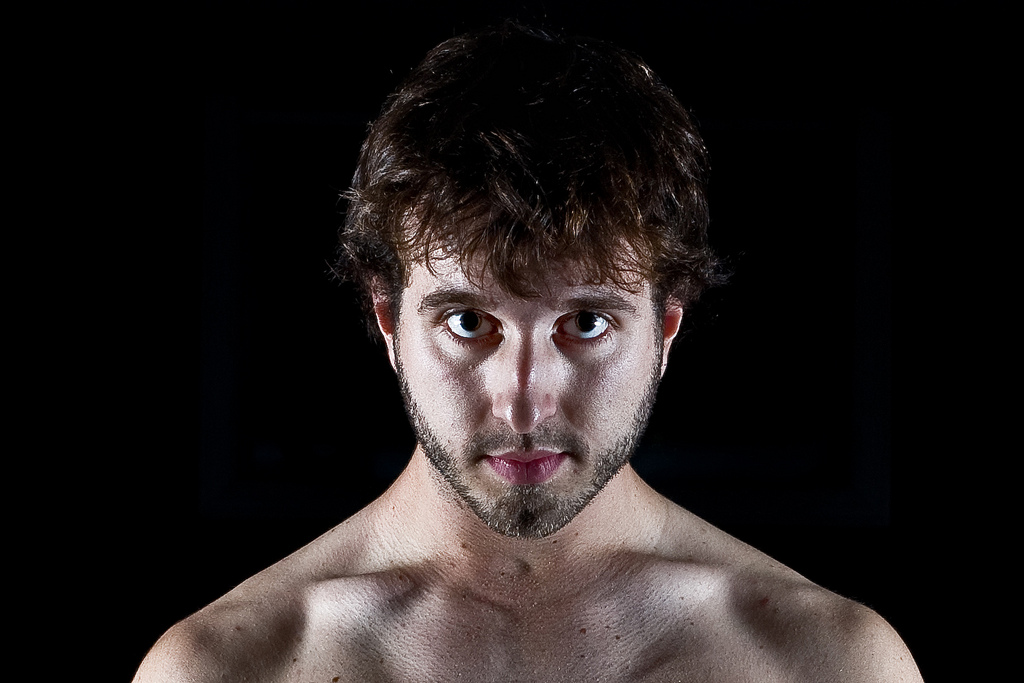 Researchers Michael Kraus and Teh-Way David Chen have found that professional fighters give away their fighting ability with nothing more than their smile.
Study #1 – Actual Fighter Performance
The researchers presented photographs taken during MMA prefight to four naïve coders who rated the fighters on smile intensity. Photographs were taken from ufc.com and the fighters where shown in the typical fighting stance in profile view with arms raised and fists clenched while facing their opponent.
Careful examination of the photographs showed that fighters primarily smile using the lips only by flexing the zygomatic major muscle and rarely using the muscles surrounding the eyes (obicularis oculi muscles). Therefore, when smiles did occur, they were not true, honest, Duchenne smiles.
The three main categories of smiles included: (a) a neutral expressionless facial configuration showing no contraction of the zygomatic major muscle, (b) a toothless smile expression showing moderate contraction of the zygomatic major muscle, and (c) a teeth-baring smile showing intense contraction of the zygomatic major muscle.
To objectively track the fighter’s performance the researchers employed fight statistics from FightMetric.com which is the official tool used by the UFC to assess fighter performance. This tracks punches, kids, and grappling (wrestling and submission).
Results showed that smile intensity predicted a decrease in performance of the fighter. Thus, as the smiles of fighters become more pronounced, they were more likely to lose the actual physical match and also perform more poorly during the bout.
Therefore, the first study clearly demonstrates that increased smile intensity predicts reduced physical dominance empirically measured in fighter performance.
Study #2 – Perceptions of Fighters
In the second study untrained observers where shown either smiling or neutral photographs of a fighter. They were then asked to rate the fighters on a number of personal characteristics including hostility, aggression and trustworthiness.
The researchers hypothesized that the observers would rate the fighters as more trustworthy and agreeable in the smiling expression over the same fighter in a neutral expression. The results showed this precise finding.
When fighters smiled, they were judged to be less physically dominant and therefore less masculine and by extension less likely to win a match.
Drawing Conclusions
The study demonstrates that smiling is a nonverbal signal demonstrating a desire to reduce physical dominance. When a fighter smiles during a pre-fight face-to-face encounter with his opponent, he is leaking information about his overall desire to appease and submit to his counterpart.
Over two studies, it was found that fighters who smile are not only more likely to lose an actual match, but also perform more poorly. Additionally, naïve observers also rate fighters who smile as less capable fighters and less dominant.
The researchers also raise an interesting point. The smiling fighter may be using smiles subconsciously in hopes that his opponent would reduce the use of his full force during the match. Say the authors, “The smile would then be used as a strategic nonverbal sign of appeasement.” However, as they continue, “Even if fighters did intentionally express smiles, it is clear that this nonverbal behavior had the opposite of the desired effect – fighters were more hostile and aggressive during the match (e.g., more knockdowns; Study 1) toward their more intensely smiling opponents.”
This is important to note, as smiles are routinely noted as gestures of appeasement and are commonly seen in women, over men, (likely) for this very reason.
However, it seems as though the smile might not be enough to placate the actual aggression – especially when “push comes to shove.”
In other words, a smile, as shown here, is likely a nonverbal signal demonstrating a desire to submit and acquiesce to the dominance of another, however, when that submission is not back by an actual drop of the fists, then it’s likely perceived as a direct challenge and read as pride.
Then again, it’s not as if the fighters were actually smiling when it might make a difference – that is, smiling during the match! For should one smile earlier in the day, then begin to punch, kick and wrestle, the signal demonstrably loses its honesty!
Image Credit: Pier-Luc Bergeron
Resources
Krause, Michael W. and Teh-Way David Chen. A Winning Smile? Smile Intensity, Physical Dominance, and Fighter Performance. Emotion. 2019. 13 (2): 270–279. DOI: 10.1037/a0030745