
Risky Versus Proceptive Nonverbal Sexual Cues
Christopher Philip
 Romantic relationships form in two very specific ways. Either by verbal proposal such as “Do you want to go out with me?” or through use of nonverbal channels to signal interest and availability. These include eye gaze, tilting the head, showing skin and so forth (see complete list below).
The verbal channels are a “risky initiative” because once delivered, are clear, concise and carry commitment – they can’t be taken back. On the other hand, nonverbal channels or “proceptive cues” are ambiguous. They are less clear and can be confused with general affilation.
To imagine a risky initiative think of the movie “When Harry Met Sally.” In the movie Harry played by actor Billy Crystal, makes a risky initiative to which Sally played by Meg Ryans finds offensive. The character Hank response by saying “I take it back.” Because the couple has no history of romantic affiliation the verbal commitment caries risk.
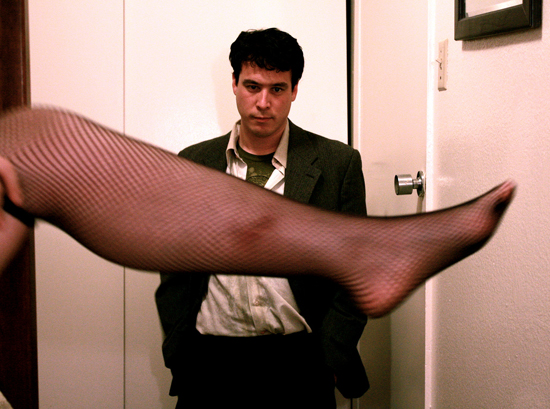
Compare this with nonverbal proceptive signaling which is at best ambiguous. In the film “The Graduate” the character Mrs. Robinson provides a myriad of proceptive nonverbal signals to her daughter’s friend Ben. She suggests that her husband “won’t be home until quite late” and when Ben questions her suggestion saying “You don’t think I would do something like that…You are trying to seduce me, Mrs. Robinson. Aren’t you?” She props her leg up while seated on the chair next to her in order to expose the inside of her dress. She follows this up with suggestive glances, wrist and neck exposure, playing with her earrings while laughing coyly.
Clearly there are some key differences between the two strategies. Proceptive cues are often nonverbal, indirect, ambiguous and deniable. Therefore, while they can be rejected if done overtly, are often simply missed altogether leaving the initiator, whom is usually a woman, no worse for the wear. Risky initiative, in contrast, are direct, unambiguous, leave no deniability and put the initiator wide open to clear rejection.
 Which strategy is preferable? Which would you choose?
The possibilities are likely largely out of your control as nature has essentially already decided for you based purely on your gender.
While women could conceivably employ direct solicitation, even recent progressive feminists have largely failed to make progress in this department. Women still choose the less risky proceptive ‘fish and lure’ tactics of displaying nonverbally, essentially reducing male suitors to make the risky initiatives. While it is not unheard of, men still, even in modern times, do much of the risk taking and therefore, also face the majority of the direct rejection.
In a 2019 study by Mills, Janiszewska and Zabala it was found that a whopping 93% of women preferred to be asked out and only 6% preferred to do the asking. Men on the other hand, preferred to ask women out (86%) rather than be asked out (16%). Men also reported asking an average of four women out on a first date in the previous year while women did not ask anyone out on a first date. Similarly, men reported only being asked out once in the last year while women reported being asked out about 5 times.
So why are men still relegated to the risk of rejection?
Dr Michael Mills, Associate Professor Psychology Department Loyola Marymount University believes that more than simple gender roles are at stake. He believes that women and men have been handed specific adaptive psychological wiring through evolution.
Men and women face different reproductive constraints. Historically, women invest more in child care and need to be certain about suitors to ensure they give their children the best edge, this makes them choosy. But men also take risks. For example, men are always less certain of paternity than women are of their own maternity. Women also do not want to be perceived as promiscuous by other women. Studies have shown that men are more willing to associate with promiscuous women, whereas women are more likely to distance themselves or shame them. Women, so it goes, do not want to risk seeming dishonest by association with promiscuous women – they don’t want to risk losing their paternal investment. Mills, calls this the “female reputational defense theory.”
The end result, naturally, is more covert sexual offers.
Now we have a framework to understand why Mrs. Robinson, a married woman, acts covertly to solicit sex from Ben. She wants to do so discreetly and shift the burden of blame onto Ben should the situation unfold out of favour i.e. her husband catches on (lest she lose parental investment).
In the long run women use their best assets to solicit attention including cues of fertility, youth, health and sexual fidelity. They also refrain from making the first move so as to appear less promiscuous. Dr. Mills states that women do not take the first move in order to demonstrate evidence that they will remain faithful and therefore represent good long term mates. By being passive in the roll, they are showing that they are not likely to engage in extramarital affairs as the aggressor in the future as evidence by their current or past behaviour.
So while progressive gender roles suggest that men and women are free to solicit for dates on equal footing, the theory and evidence suggest that this is not likely to occur anytime soon. While women move more into male-dominated roles, they are, it seems, hardwired to commit to a passive gender role when it comes to dating and courtship.
In other words, if you’re one of the 16 out of 100 men who prefers to be asked out on dates by women rather than take the risk yourself – don’t hold your breath, at best, this is highly unlikely. Instead, learn to read the nonverbal cues, pull your pants up, hold your chin up high, and prepare yourself to face the occasional, but natural process of female rejection.
So what happens if women do take the risks and ask? Research conducted in 2019 by Hald and Høgh-Olesen found that those who take the risk fair better than expected. Male “risk initators” had a 43% acceptance rate and women had a significantly higher rate at 68%.
 So if the risk of rejection is higher for men than women, why do men still take the brunt of the burden?
My take?
I personally believe that women are more passive because it’s actually better for them as a mating strategy in the long run. This is due to power roles. Women want to secure a committed and driven partner and the best way to do this is to be the passive “object” of desire. If a woman solicits she puts herself as the lead and thus shows that her desire for him is stronger than his is for her – and this very likely to be the case. A man may go along with this arrangement should no others be on current offer as a matter of convenience.
However, an attractive women, in the eyes of a man is worthy of committing and providing for. While the reverse is certainly possible, very few women have progressed beyond being cared for through male resource provision in lieu of being the offerer of care by being a provider. Women simply preferred to be cared for by men rather than be the providers to men. So when a woman pursues men, she automatically sets herself up for future disappointment. Eventually the woman will cease being the aggressor and the man will move on to a woman he feels is motivating enough for him to secure and provide for her – the more natural condition.
So if you’re ready for natural gender roles this list is equally applicable to men as it is to women. Women simply need put out the cues and men simply need to pick up on them. Women should direct their cues to specific men they desire through eye contact and proximity, and wait until men make a verbal commitment. If men do not pick up on the cues, then he’s unlikely (in my opinion) to desire a long term committed and provisionary role in the relationship.
The cues are additive, the more you do, the easier they will be to be read and also the greater the interest they will signal.
Comprehensive List Of Nonverbal Proceptive Cues (Moore, 1985)
1) Type I glance (room encompassing glance): The girl moved her head rapidly around the room and then back to its original position without making eye contact.
2) Type II glance: A short darting courtship glance made toward a specific person of interest.
3) Type III glance: This is eye contact, or “eye fixation” lasting more than 3 seconds toward a particular boy.
4) Eyebrow flash: A quick rise of the eyebrows and specific head and neck movements.
5) Head toss: The head is moved back sharply for a few seconds before coming back to it’s original position.
6) Hair flip: Similar to the head toss except the hair was manipulated away from the face or sequentially moved, fixed or groomed.
7) Head nod: The head is moved up and down in close proximity to the man.
8) Face-to-face: The head is moved head-to-head to a man such that the noses almost touch.
9) Neck presentation: The head is titled to the side at 45 degrees to expose the neck. Sometimes the neck is stroked with the hand.
10) Lipstick application: Lipstick is applied while making eye contact to a target male.
11) Lip lick: A women open her mouth and draws her tongue over her lips.
12) Lip pout: Lips are placed together and pushed forward.
13) Smiling: The corners of the lips are turned upward. The teeth may or may not be exposed.
14) Coy smile: A half-smile where the teeth are not shown followed by downward eye gaze.
15) Laughing and giggling: Giggling is a softer laugh where the mouth is not opened.
16) Whisper: Talking quietly at close proximity.
17) Arm flexation: The arm is flexed at the wrist with elbow bend toward the body. May be repeated a few times.
18) Tapping: The finger is used to repeatedly make contact with a target.
19) Palming: The hand is turned toward a target such that it is exposed.
20) Gesticulation: The hands and arms are moved during speech.
21) Hand holding: Grasping the hand of a target.
22) Primping: Clothing is patted, smoothed, or adjusted to make it appear neater and more presentable.
23) Skirt hike: The hand moves the lower portion of the skirt up to expose more thigh.
24) Object caress: Playing with an object such as keys.
25) Stroking: Touching a targets hair, neck or face.
26) Leaning: Leaning the torso in toward a target male.
27) Brushing: Moving the body closer sometimes pushing a breast against a male target.
28) Knee touch: Legs are brought together such that the knees make contact.
29) Thigh touch: While sitting, the thighs are brought so close, that they touch.
30) Foot-to-foot: The feet make contact, such as under a table.
31) Placement: A woman takes the man’s hand and places it on her body.
32) Shoulder hug: The arm is draped over the shoulder of a target.
33) Hug: The arms form an embrace around a target.
34) Lateral body hug: The girl moves close enough that a man is able to shoulder hug.
35) Frontal body hug: The chest and things make contact, but there is no noticeable hug.
36) Hanging: The weight of a girl is supported by a male target.
37) Parade: An exaggerated walk with swaying hips.
38) Approach: The woman comes very close to the target.
39) Request: Such as pointing to the dance floor or inviting him to move to another location.
40) Solitary dance: Moving the body to the tune of the music without actually being partnered.
41) Pointing/permission grant: Pointing or indicating to a chair as a request for accompaniment.
42) Aid solicitation: Asking a target for help on a task.
43) Play: Tickling, pinching, sticking the tongue out, covering eyes, etc.
Image Credits: Sean and Lauren
Image Credit: Robert Bejil
Image Credit: John Nakamura Remy
Resources
Clark, A. Attracting Interest: Dynamic Displays of Proceptivity Increase the Attractiveness of Men and Women. Evolutionary Psychology. 2008., 6(4), 563-574.
Dosmukhambetova, D., and Manstead, A. Strategic Reactions to Unfaithfulness: Female Self-Presentation in the Context of Mate Attraction is Link to Uncertainty of Paternity. Evolution and Human Behavior. 2019. 32, 106-107.
Hald, G. M., & Høgh-Olesen, H. Receptivity to Sexual Invitations from Strangers of the Opposite Gender. Evolution and Human Behavior. 2019. 31, 453-458.
Moore, Monica. M. Nonverbal Courtship Patterns in Women: Context and consequences. Ethology and Sociobiology. 1985. 6:237- 247.
Moore, M. M. Courtship Communication and Perception. Perceptual and Motor Skills. 2002. 94(1): 97-105. doi:10.2466/PMS.94.1.97-105.