
Read Facial Expressions Better By Mimicking Them
Christopher Philip
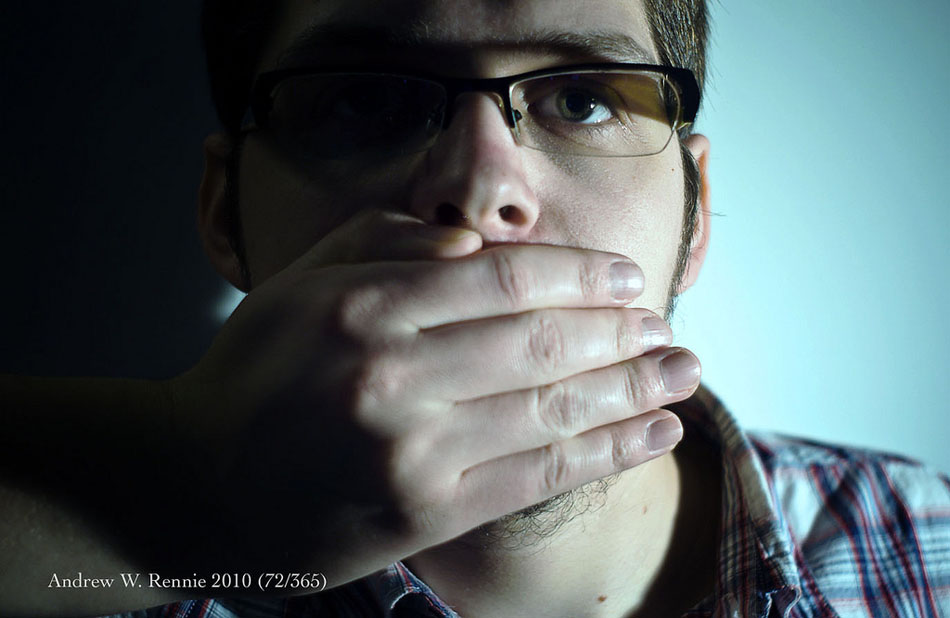 The role of empathy is rooted in our ability to put ourselves in the shoes of others and to see and experience the world as they do.
We’ve long known, too, that people’s bodies often mirror the bodies of others and that this is also a method of empathy. When two bodies align in similar ways, they tend to experience the emotions that the other body is feeling.
Well, what happens when one body is prevented from mirroring the body of another person? Would their ability to read them accurately be hampered?
A team of researchers sought to test this very idea.
In their study, participants were fitted with special mouth guards that inhibited their ability to mimic the genuineness of true and false smiles.
In the first experiment, the researchers found that the mouth guards interrupted the facial reactions. They found that the mouth guards did not totally inhibit facial movement, but instead induced irrelevant muscle activity which in turn, interfered with participant’s mimicry.
In the second and third experiment, subjects then viewed and rated true and false smiles while wearing mouth guards or not as well as with or without additional distractions including squeezing a ball or wearing a finger-cuff heart rate monitor.
Results showed that the mouth guard which blocked mimicry of the smiles compromised the decoding process in the participants. The researchers found that true and false smiles were judged as being equally genuine.
“Together,” say the researchers “the experiments highlight the role of facial mimicry in judging subtle meanings of facial expressions.”
Mirroring other people’s facial expressions, therefore, is a great way to help the brain consciously (and perhaps subconsciously) produce the correct, or like-emotions which they are viewing in other people.
In future, we may find that mirroring people’s bodies and their body language may produce similar effects. As we have long known, nonverbal communication is entwined with brain functioning and emotion. More and more research is showing just how intimately our brains and bodies are tied.
Image Credit: Andy Rennie
Resources
Rychlowska, Magdalena; Elena Canadas; Adrienne Wood; Eva G. Krumhuber; Agneta Fischer and Paula M. Niedenthal. Blocking Mimicry Makes True and False Smiles Look the Same. PLoS ONE. 2019. 9(3): e90876. doi:10.1371/journal.pone.0090876.