
When Power Body Language Goes Too Far
Christopher Philip
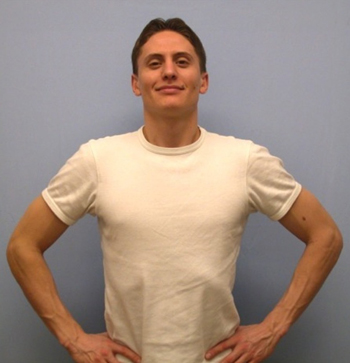 When Amy Cuddy and colleagues released their powerful message stating that dominant body language yielded positive results, she couldn’t have imagined the extremely positive reaction she would have received.
Her TED speech quickly became one of the most popular ever and all manner of people, including athletes, business people, even children, began to adopt her ‘fake it, to become it’ postures with chin held high, shoulders back and hands on hips. This, says the research, boosts testosterone, and simultaneously drops levels of the stress hormone cortisol.
All good, right?
Not so fast. As we cover here (check out the Nonverbal Cue Catalog), with every body language cue, comes a corresponding body language result and while vying for power, all the time, may seem like a great plan, it’s ultimately produces only short-term results – that is, if you can’t back up the posture with actual confidence and ultimately, real world results, you’re going to fail.
Thankfully, researchers Connson Locke and Cameron Anderson, UC Berkeley have produced a study that helps illustrate the natural corollary stemming from power body language.
Specifically, the study found that a “leader-like” demeanor including an upright posture, clear, resonant vocal tone and strong eye contact, enhances the image of effectiveness so much so that it stifles participative decision making by nearby participants.
In other words, when you act powerful on a task, you can expect that your word will be final – and that’s not always a good thing.
“[W]hile leaders who exhibit a powerful demeanor may boost their appearance of competence, they also risk stifling follower voice precisely because they appear more competent.”
So while the “make-yourself-big” task which Cuddy encourages before a meeting, speeches or job interviews, works, it ignores the fact that leadership is nuanced and complex.
You can’t just use a nonverbal cue effectively in all and any instance. Being dominant is great, but equally effective is appearing submissive – in the proper context. Knowing which one is applicable is the key to the mastery of nonverbal communication.
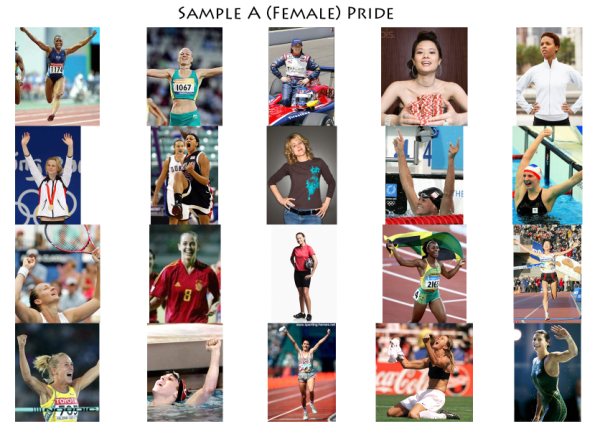
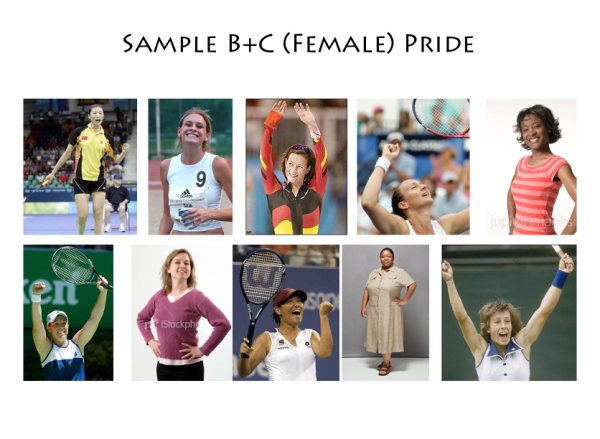
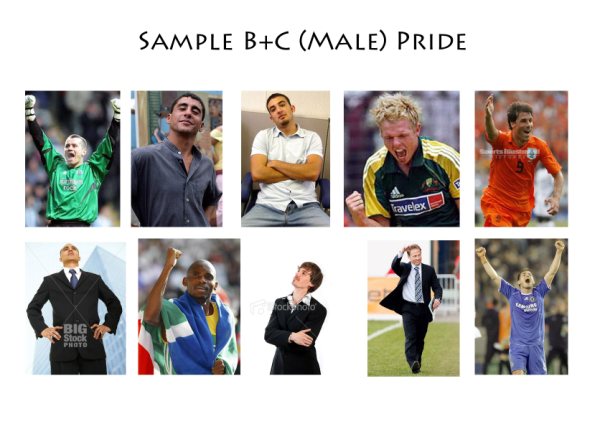 There are times when leaders should act small rather than big. Looking large is great when you want to force an issue, but when you need dissenting opinions and creative input, it’s best to turn down the dominance. It’s not easy to miss the guy who’s always puffed up and trying to control meetings.
In the real world you may be tasked to come up with a new strategy to boost the productivity in your organization. Once finished presenting one possible solution, you may ask for honest input. If done while power posing, rather than getting creative conflict, you’re likely to receive positive statements supporting you. Instead of being supplied with alternative views, you’re like to hear that your proposal was perfect.
When you’re brainstorming and need ideas to flow, your nonverbal cues should reflect the type of reaction you desire. Using a powerful, resonant voice, strong eye contact while sitting at the head of the table, is quite counterproductive.
“In three laboratory studies, we found that the more confidence the leader exhibited nonverbally, the less followers participated in joint discussions. Furthermore, followers deferred to leaders who exhibited a confident demeanor even when leaders made incorrect decisions,” say the researchers in their study.
In fact, the study found that 76% of the participants legitimately agreed with the assertions of the leader simply because they were delivered confidently. The rest simply agreed with the assumptions of the leader insincerely – possibly because they were afraid to dissent.
So if you want to encourage participation what should you do instead?
Take a passenger seat rather than the head of the table. Use less eye contact, soften your voice, let your body loosen up, lean away from the topic instead of taking it head on, smile and nod more. Better still, let someone else lead if you feel that you can’t adopt less authoritative postures and when they do, ask lots of questions instead of making positive declarations. Don’t be afraid to take the back-seat while encouraging people to freely express themselves.
So when you need to command followers, yes, use power body language, but when you need creative input, dial it down.
Resources
Locke, Connson C. and Cameron Anderson. The Downside of Looking Like a Leader: Leader’s Powerful Demeanor Stifles Follower Voice in Participative Decision-Making
http://www.lse.ac.uk/newsAndMedia/news/archives/2019/08/Leaders.pdf
Carney, Dana R.; Amy J.C. Cuddy; Andy J. Yap. Power Posing: Brief Nonverbal Displays Affect Neuroendocrine Levels and Risk Tolerance. Psychological Science, 2019; 21 (10): 1363-1368.