
‘Eye’ Can Tell You’re Walking My Way – How To Read The Body Language of The Eyes
Jenny Galvao
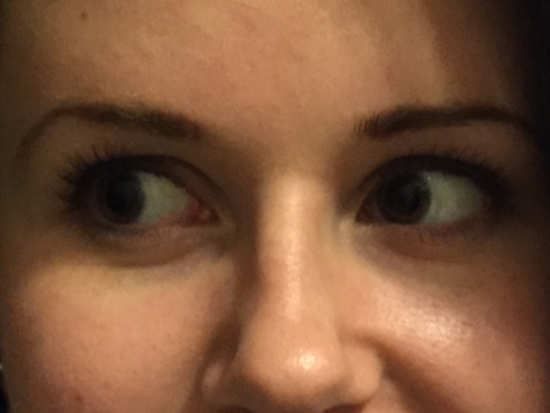 According to research carried out by Lauri Nummenmaa of the University of Tempere and associates, we can infer what other people’s movements will be based on the direction of their gaze, and we use this information to map out our own movements accordingly.
To determine if someone wants to turn left or right people track the eye movements of others. We then decide if we’ll turn in the same direction to follow them or turn in the opposite direction to avoid them.
According to the researchers “people are also aware of how and why others update their visual representations and use this information flexibly for their own movement planning and visual sampling of the environment.”
In this study, participants watched videos of a male figure walking which was either constantly looking to the left or constantly to the right of the participant. Participants were instructed to watch the male figure walk and determine which direction he was moving in. Next, they had to indicate on a response pad which direction they would go in order to avoid a collision.
The results showed that people could use the direction of an individual’s gaze in order to infer which way they intended on moving. So first eyes were tracked and then once the direction was noted, the eyes looked away, and the body was brought with it.
As such, the eyes are a way of “mind-reading” because eye gaze direction allowed the participants to skirt the stimulus character and move to the side that the stimulus was not looking toward.
In a real life situation we use eye gaze direction information to go in the opposite direction of the person we are observing. Said differently, we tend not to try not to mirror other peoples gaze, instead we attempt to evaluate their expected walking path and then walk on the side of the street that we don’t expect the other person to walk on.
Their research “confirms that the direction of other people’s social attention is also an important determinant in guiding observers’ movement and sampling of visual scenes.”
This study is one of many which examines and lends support to the idea that we are often governed by tiny and subtle body language and facial cues occurring seemingly passively all around us in order to guide our path through everyday life. We rely on the smallest things such as a person’s gaze, the speed of their pace, and other relevant cues in order to literally navigate our ways through life.
We sometimes overlook the huge role body language plays in our lives, but if you consider the little things, you’re surer to understand its much broader impact.
The research says that you often rely on the gaze of another individual in order to avoid walking into them which seems like a fairly obvious and benign finding. However, the study is important in telling us how important subtle cue are in governing our daily lives. Now that you are more consciously aware of this, you won’t ever need wonder “are you walking my way?” again! You’ll literally read it in their eyes!
 About the Author: Jenny Galvao is an undergraduate student at the University of Guelph studying psychology.
Resources
Lauri Nummenmaa; Jukka Hyönä and and Jari K. Hietanen. I’ll walk this way: Eyes Reveal the Direction of Locomotion and Make Passersby Look and Go the Other Way. Journal of The Association for Psychological Science. 2019. 20(12):1454-1458.