
Do Expansive Postures Really Boost Positive Hormones? – A Critical Review of Power Posing Research
Christopher Philip
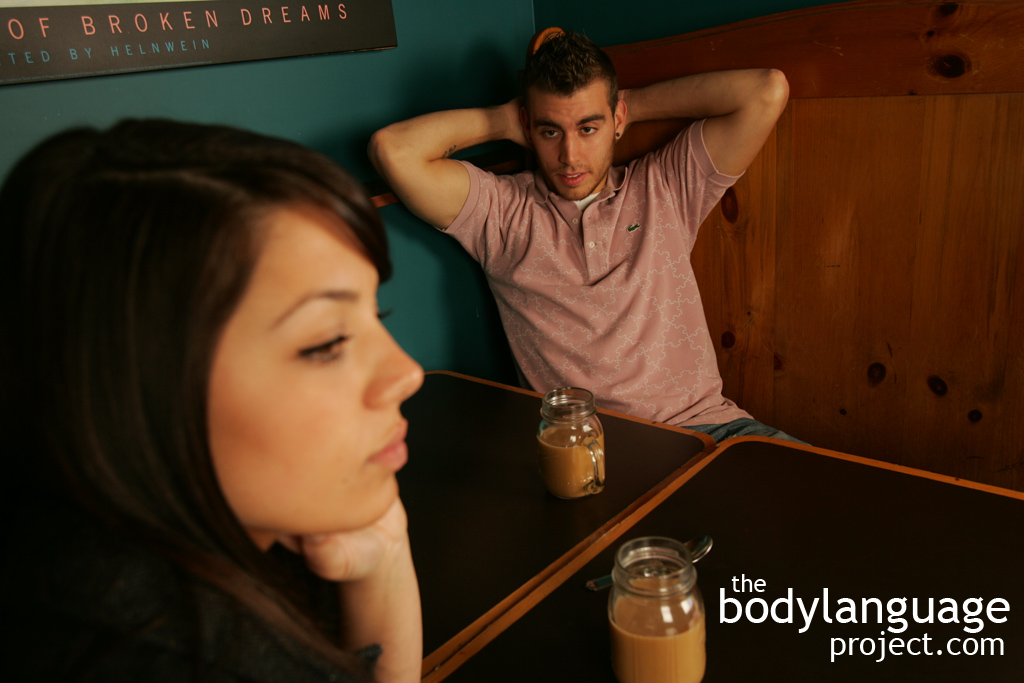
A bad time to “power pose?” But Amy Cuddy said…
When researchers Carney, Cuddy and Yap, 2019 discovered that not only do so called expansive or “power postures” such as placing the hands on the hips or putting the feet up on a desk, produce feelings of power, but they also a create real hormonal changes, the world got really excited.
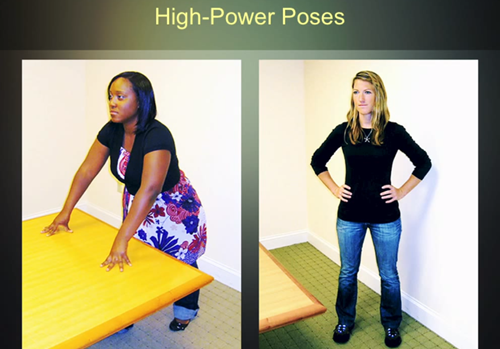
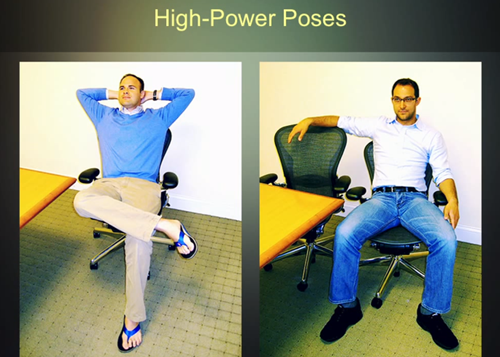 Soon Amy Cuddy’s Ted talk (see video at bottom) became one of the most viewed videos ever. It was an amazing new finding because it showed that not only does our body control our psychology to produce confidence, but it also affects our endocrine system to produce positive effects by boosting the power hormone testosterone and also simultaneously drops the stress hormone cortisol. Amazing!
But not so fast.
As we know, two main criteria need to be met for good science – it must be empirical in nature with proper methodology and perhaps more importantly, must be replicable. That is, more than one study, preferably by different researchers, should point to the same conclusion. It’s then, and only then, that we can extract something useful and expect to find similar effects in real life situations.
As we pointed out, though it had gone generally unnoticed, is that researcher Steven Stanton, Department of Psychology and Neuroscience, Duke University, raised some serious issues with the hormonal mechanism and methodology of the original Carney, Cuddy and Yap research.
In his paper Stanton pointed out that the research made a grave mistake by lumping men and women’s data together potentially creating a finding that was not accurate. He surmised that women’s power comes not from testosterone, like men, but rather from estrogen. Lumping men and women together as was done in the Carney, Cuddy and Yap study, therefore, might simply find a small variation between men and women from the first measure (before power posing) to after, thus exposing a simple accidental artifact.
It turns out that Stanton was likely correct in his assertions.
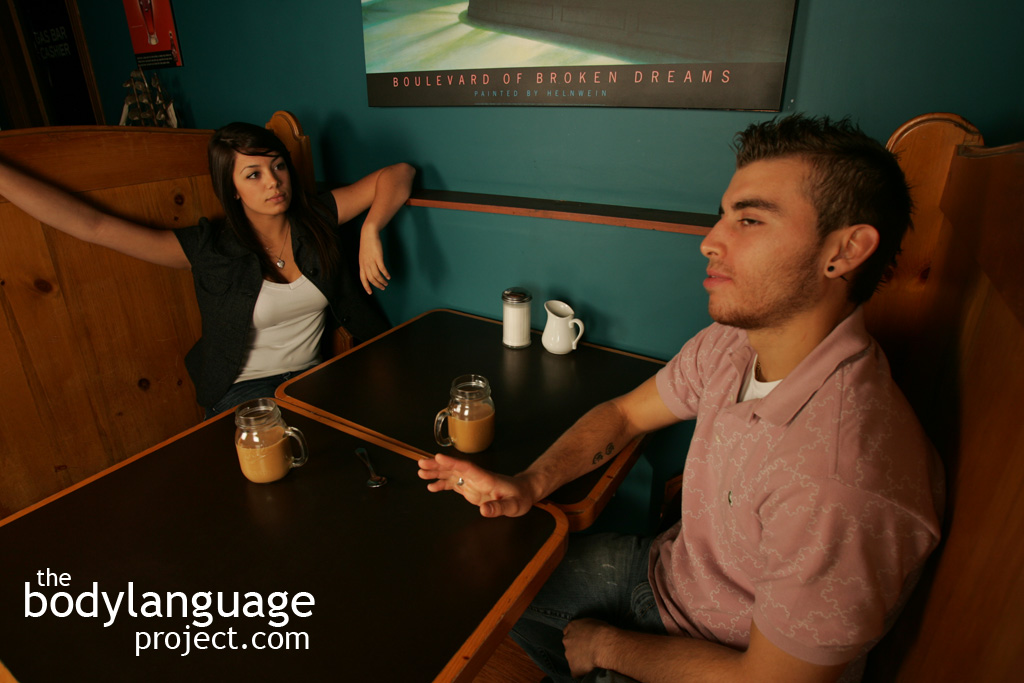
New research suggests that we feel more powerful when we power pose, but that there is no corresponding boost in power hormones.
New 2019 research led by Dr. Eva Ranehill of the Department of Economics at University of Zürich has found that taking on so called “powerful” bodily postures does not lead to a corresponding rise in the power hormone testosterone nor does it lead to a drop in the stress hormone cortisol, thus refuting earlier research.
“Power posing makes people say that they feel more confident, but has no other effects. The researchers find power posing to have no effects on the hormones testosterone, cortisol, or any of the actual behavior of people in the experiment,” say the researchers in a press release.
Their study did however, confirm that power posing still made people report greater feelings of power, which was similar to the original study.
The study looked at 102 men and 98 women which were randomly assigned to either “high-power” or “low-power” poses. The participants then took part in a financial risk-taking task. This has them select between fixed amounts of money or risky gambles (same as the previous study). Financial risk taking was measured as the share of risky choices chosen.
As before, saliva samples were taken to measure hormonal levels.
“Our study is far more conclusive than the original study, because we have a lot more data,” says Roberto Weber, Professor at University of Zurich, and a co-author on the new paper. ”
“Our study comprises a sample of 200 men and women, and we find no effect of power posing on hormones or behavior. The larger sample size in our study makes it much less likely that we find results that arise by chance.”
“Ours is also the only published study, to our knowledge, that attempts to replicate the effect of power posing on hormones.”
Dr. Anna Dreber, another coauthor from the Stockholm School of Economics, adds that, “This illustrates the importance of replicating published research findings. While a single study may raise some interesting questions, we need replications in order to answer these questions.”

Should women ever power pose? Study suggests that women’s power center is not testosterone and power posing, but found in estrogen and complimentary body language.
So what are we left with? Is power posing totally worthless to the nonverbalist?
No, of course not. “Power posing,” or expansive postures has received much empirical support when it comes to a positive psychological boost. The new research by Dr. Eva Ranehill simply corrects the previous hormonal connection. So while power posing is unlikely to boost your testosterone and feed back into your endocrine system, it will still produce a psychological boost leading to an overall boost in wellbeing.
Also, if curious, draw your attention to this study (this is where things get complicated and nuanced)by Tomi-Ann Roberts, Professor of Psychology, Collorado College, which found that women actually felt worse when they held erect postures!
Studies such as this show us that nonverbal communication is rich and nuanced and requires a careful examination. A full understanding of “body language” is not something that can be obtained in a crash course. Stick with us as we carefully examine the research and data and deliver you an honest and detailed approach to the field!
How should we get along with other people? Why not open your “body language tool chest” and try to balance your approach and compliment the body language of others.
Resources
Cuddy, Amy J.C., Caroline A. Wilmuth, and Dana R. Carney. The Benefit of Power Posing Before a High-Stakes Social Evaluation. Harvard Business School Working Paper, No. 13-027, September 2019.
Bartholomewn, Morgan E.; Sheri L. Johnson. Nonverbal Dominance Behavior Among Individuals at Risk for Mania. Journal of Affective Disorders. 2019. 159: 133-138.
de Lemus, Soledad; Russell Spears and and Miguel Moya. The Power of a Smile to Move You: Complementary Submissiveness in Women’s Posture as a Function of Gender Salience and Facial Expression. Personality and Social Psychology Bulletin. 2019. 38(11): 1480-1494.
Tiedens, Larissa Z. and Alison R. Fragale. Power Moves: Complementarity in Dominant and Submissive Nonverbal Behavior. Journal of Personality and Social Psychology. 2003, 84(3): 558–568.