
Distress or Happiness Reflected in an Infants Eyes
Jenny Galvao
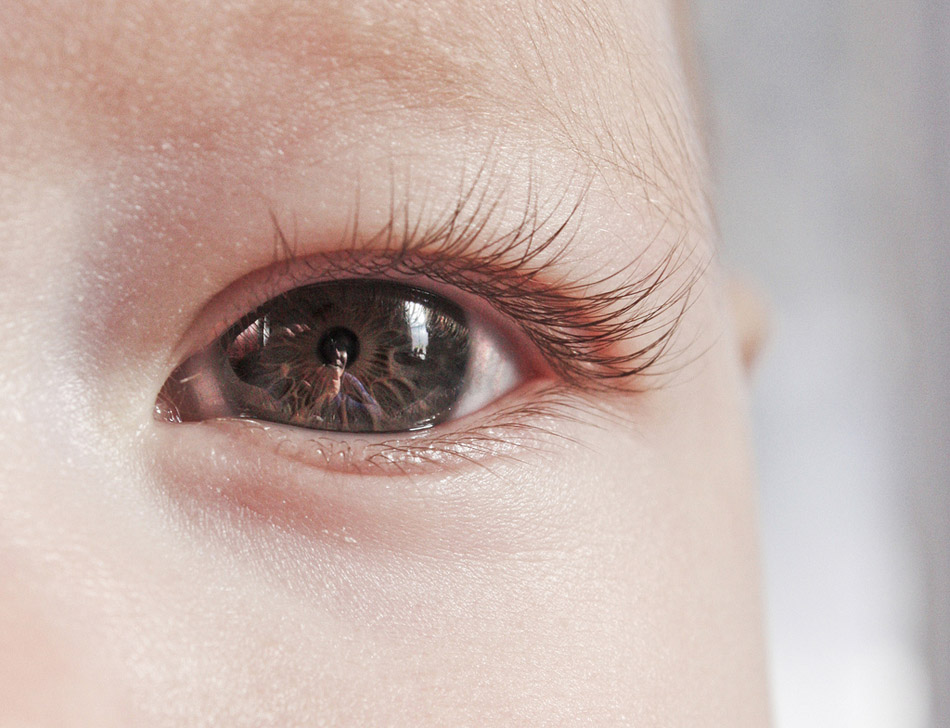 According to research by Elena Geangu and Rishi Bhardwaj of Durham University, Petra Hauf of St. Francis Xavier University, and Wolfram Bentz of the University of Lisbon, the size of an infants pupil can change based on the emotions of others.
If an infant is in a negative emotional state (e.g., distress), another infant is able to pick up on that enough for their pupils to increase in diameter, and if a person is in a positive emotional state (e.g., happiness), an infants pupil will actually respond appropriately and increase as well.
The researchers explain that “young infants respond emotionally to both the positive and the negative emotions observed in others — when their own mother displays facial and vocal expressions of happiness, sadness, and anger, 2-month-old infants tend to respond significantly with matched facial expression categories.”
In other words, infants cue in on all emotions, and you can literally see it in their eyes.
In this experiment, 6-month olds and 12-month olds were exposed to recordings of three male infants displaying positive, negative, or neutral emotions. Their gaze and pupil size was observed as they were exposed to emotional stimuli.
The results confirm that when infants observe the emotions of other infants, their pupil size increases. The researchers also found that observing happiness increased the pupil size, but observing distress induced a larger pupil size increase for a longer period of time. The study tells us that emotional arousal (of any kind), rather than being hidden, is easily detected by gazing into the eyes of infants.
“It has been suggested that others’ negative emotions are more likely to lead to shared affect in the observer than the positive ones, and that this bias towards negativity is not present from birth, but rather develops towards the end of the first year of life,” say the researchers.
This study shows us that infants are far more receptive to emotions than we had ever thought. Young infants can both observe the distress of others as well as their joy, and react to it in a way that can be measured.
We know that the eyes are the windows to the soul, but perhaps there’s more to this story. Eyes can not only give away emotional cues, but deeper than that, they can also indicate a response to cues.
Amazingly, the study shows us that babies respond appropriately at just 6 months of age.
This study confirms that body language is a process that starts at an extremely early age; in fact so early, that regular verbal communication is barely beginning to form.
Body language is one of the first languages “spoken”, whether it is conscious or not. The eyes not only tell, but they also have the ability to reveal responses to emotional stimuli. More than this, the process is totally automatic, yet reveals an honest state within the body. This isn’t unlike many of the larger and more noticeable postures and cues delivered by our bodies during emotionally charged events.
“An eye for an eye” is said to make the whole world blind, but in this case, having an eye for an eye, can actually provide some accurate insight.
 About the Author: Jenny Galvao is an undergraduate student at the University of Guelph studying psychology.
Image Credit: Emily
Resources
Geangu, Elena; Petra Hauf; Rishi Bhardwaj and Wolfram Bentz. Infant Pupil Diameter Changes in Response to Others’ Positive and Negative Emotions. 2019. PLoS ONE 6(11): e27132. doi:10.1371/journal.pone.0027132