
The Culture Of Nonverbal Triumph
Christopher Philip
 Previous research has outline three main elements in the body language of victory including expansion, aggression, and attention. These refer to the victor’s nonverbal reaction to winning agonistic encounters. Specifically studied were Olympic judo matches which pins one person against another in head-to-head combat – one winner takes all.
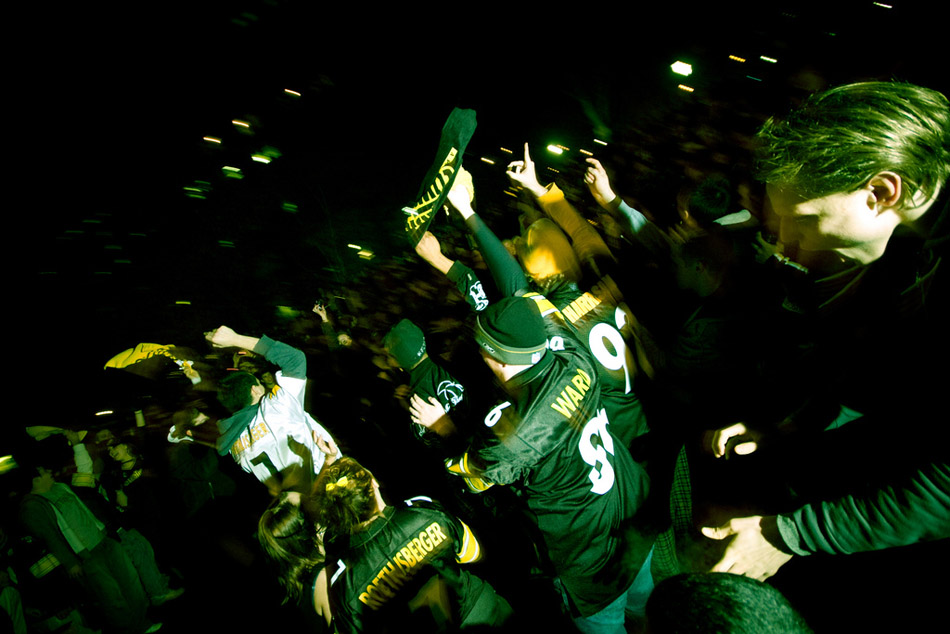
When we win, we expand by putting our hands up in a v-shape, puff out our chests, clench our fists, toss our head back and put out a guttural vocalization. In other words, we draw attention to ourselves so that others notice.
However, researchers Hyisung Hwang San Francisco State University and David Matsumoto, Humintell, wanted to study the effects that culture played into nonverbal displays of triumph. Specifically they wondered if cultural effects would weaken or strengthen the cues displayed in victory.
In their paper they reason that culture makes decisions about how our societies deal with dominance and hierarchy.
While culture has many factors, one of the most salient for dominance and hierarchical formation is referred to as Power Distance or PD.
PD is a measure of the extent to which “less powerful members of an organization and institutions (like the family) accept and expect that power is distributed unequally.”
PD therefore is the degree to which a culture permits or encourages power, status and hierarchical differences within groups.
Some cultures set out to minimized power and status. We call these egalitarian. Status-oriented cultures, on the other hand afford more power to individuals within a group.
In both cases, though, establishing power and status is key to maintaining and protecting social cohesion to produce coordinated goals.
In the research, it was predicted that cultures higher in PD (more hierarchical) would be associated with higher expressions of victory expressions including dominance. Displaying such power is a way for victors to highlight their worthiness and rights to power.
“I won, therefore I deserve power.”
Naturally, egalitarian cultures lower in PD would tend to have the reverse. That is, victors would demonstrate fewer cues of nonverbal dominance after victory as they would be conditioned to mute their displays to more appropriate cultural levels.
The study had independent coders examine images taken immediately after victory at the apex of the reaction.
To qualify as a triumph observers looked for the following nonverbal cues:
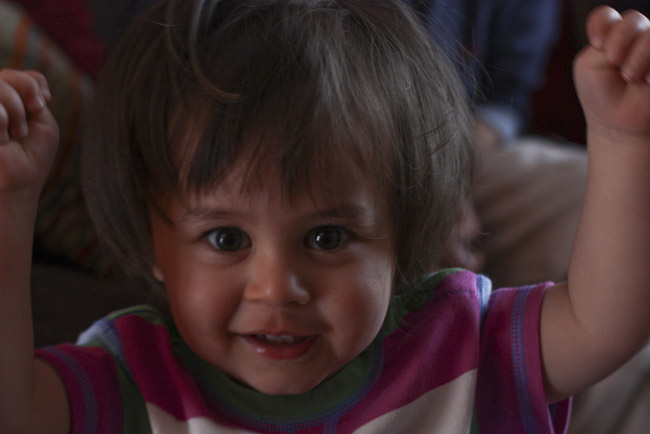 (1) arms raised above shoulder
(2) arms away from body
(3) smile
(4) chest out
(5) grimace
(6) fist
(7) head tilt back/up
(8) mouth open
(9) punching motion
(10) torso pushed out leaning back
(11) direct gaze towards one’s opponent
(12) thumbs up
(13) clap
(14) shout or utterance
(15) aggression on face.
Other nonverbal cues that were coded (for comparison) but where associated with pride or shame rather than triumph included:
(16) head tilted forward or down
(17) tongue out
(18) eyes closed
(19) one or both arms pulled in toward body
(20) hands on hips.
The results found that PD was connected to increased expansion and total triumph for winners. Overall, say the researchers “Winners from higher PD countries expressed the expansive component of the triumph expression more than those from lower PD countries.”
However, their hypotheses were only partially supported as high PD was not correlated with aggressive cues.
Consistently however, victors signaled predictably when compared to losers. Ubiquitous signals include expansive and aggressive body gestures, including grimace,
punching motion, arms raised above shoulder, arms away from body, smile,
chest out, head tilt back/up, mouth open, one or both arms pulled toward
body, torso pushed out leaning back, or thumbs up.
In future, one should pay particular attention to aggressive and threatening behaviours which we see in triumph as these are likely cues that one is seeking dominance and power.
No doubt, individual differences, much like cultural differences, will occur, however, as these cues seem to be present regardless, we can say that these are nonverbal displays rooted in human innateness.
Image Credit: Sirenz Lorraine
Image Credit: Ian Norman
Resources
Hwang, Hyisung C. and David Matsumoto. Cultural Differences in Victory Signals of
Triumph Cross-Cultural Research. SAGE Publications 2019. 48(2):177– 191.