
Children’s Control of Facial Actions Improve With Age To Create Accurate Emotional Expressions
Jenny Galvao
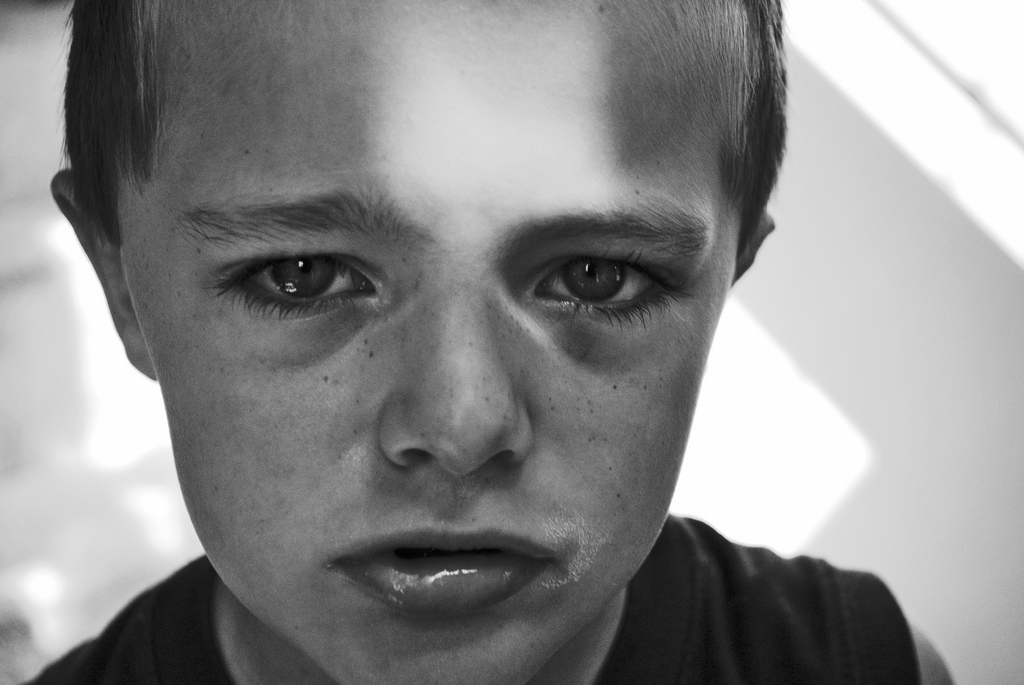 According to research carried out by Pierre Gosselin of the University of Ottawa and associates, children are able make faces relating to happiness and sadness, using the correct facial components of each emotion.
Moreover, children are able to deliberately use their motor skills to represent each of the two target emotions (sadness and happiness). Children can control their facial expressions and even produce a combination of the elements for happiness when these elements are broken down for them. Essentially, children’s motor skills are developed enough for them to imitate facial expressions shown to them both visually, and conveyed verbally.
The researchers explains that “when the children were asked to pose happiness and sadness with their faces, but received no information as to which action units to activate, they activated almost all the action units theoretically associated with these emotions.”
In this experiment, five to nine year old children of both genders participated.
Measured was:
a) Happiness: consisting of cheek raiser and the lip corner puller,
b) Sadness: included the brow lowerer, the inner brow raiser, and lip corner depressor.
The children were shown pictures of the target actions, then listened to a description of it, and were told to keep a neutral face until they had seen and heard all of the information.
Next, the children were asked to attempt the target face on their own, as accurately as possible, while looking into a mirror as a means of optimizing their performance.
The results indicated that the overall performance was better for the nine year olds than the five and seven year olds. Also, it was easier for children to successfully mimic the lip corner puller and brow lowerer than for them to copy the lip corner depressor and inner brow raiser accurately.
“This pattern of results suggests that the associated movements are resistant to change, and that extensive practice is needed to achieve finer control of the action units involved in sadness and happiness,” say the researchers.
This study shows that children have a good understanding of basic expressions including happiness and sadness and can easily mimic these elements when shown a sample.
As the children aged, they were better at doing this. This is in line with developmental information that we already have about children; fine motor skills are enhanced with age; younger children are not as experienced with it as older children are.
If you ever wonder why children imitate your facial expression, it’s because they can. Children, at a very young age, learn to use body language and facial expressions to show how they feel, and this trend continues into adulthood. Being able to mimic what they see helps them understand how to read emotions in others, and breaking down a facial expression into smaller components guides them into successfully creating the emotion on their faces.
Overall, the study shows us that while children can express themselves with a fair amount of accuracy, it also cautions us about their emotional clarity. In other words, children as old as 9 are still learning and perfecting their emotional expressions and might not be as accurate as adults in conveying them. So when reading the emotions of children, we should be careful to not take them too literally or expect to see all the elements of a full blown adult expression.
Image Credit: Lance Neilson
 About the Author: Jenny Galvao is an undergraduate student at the University of Guelph studying psychology.
Resources
Gosselin, Pierre; Reem Maassarani; Alastair Younger and Mélanie Perron. Children’s Deliberate Control of Facial Action Units Involved in Sad and Happy Expressions. Journal of Nonverbal Behaviour. 2019. 35:225–242. DOI 10.1007/s10919-011-0110-9.