
The Body Language Of Nail Biting
Christopher Philip
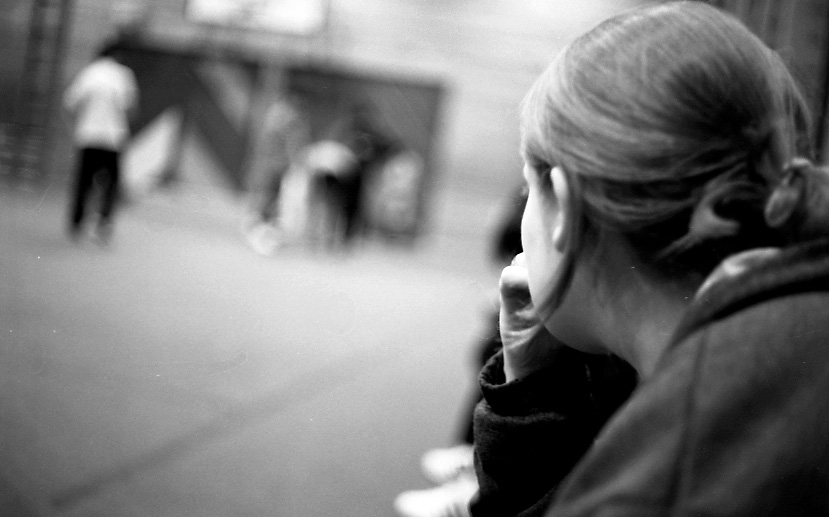 Nail biting (NB) or onychophagia is a fairly common, unsightly, yet readily observable nonverbal behaviour. In fact in a study it was found that of 248 girls aged 15-16, 25% took part in NB. Another similar study of 385 school children aged 12-16 reported a rate of 29%.
Further research has found that it tends to peek in adolescence and declines in later ages. The activity is also not gender dependent in children under 10 years, but it adolescents, it tends to affect boys more than girls.
Nail biting may lead to complications including intestinal parasitic infections, bacterial infections, misalignment of the teeth and teeth root resorption, among others.
Given its highly visible nature many parents try unsuccessfully to prevent the habit. Parents often punish and ridicule with little or no success.
However, what is the root cause of nail biting? Perhaps by understanding its nature, a better tact can address its prevention.
When clinical samples of NB are examined, in most cases it is that of underlying emotional disorders. In one study, boys with NB suffered from at least one psychiatric disorder. In fact, in boys, oppositional defiant disorder (36%), and separation anxiety disorder (20.6%) topped the list, whereas attention deficit hyperactivity disorder (ADHD) (0.6%) also made the list.
NB commonly presents itself alongside other behavioural problems such as Tourette syndrome (22.8%) and ADHD (40%) and alopecia areata (14.3%). This suggests that NB is a “behavioural sensory processing problem.” This may help both understand it and treat it.
In one study it was found that more than half of parents of a child with NB report at least one psychiatric disorder. This was most likely to be major depression. Though, the study was reportedly not typical for children with NB in the general population.
In a 2019 study by Ahmad Ghanizadeh and Hajar Shekoohi of a regular school population of children, similar incidences of nail biting was found (around 20%). Again, they found no difference between boys and girls in NB.
“The most striking findings of our study are that emotional and behavioral problems are more common in children with nail biting than those without nail biting,” say the researchers.
In fact, more than 1/5 of the children have this habit. They clarify that while there was not a significant association between nail biting and emotional problems, children who NB have a higher rate of emotional problems than children without NB. They also found that children with NB are weaker in prosocial behaviour.
The study found that nail-biting allowed children to relieve their anxiety, loneliness, and deprivation of safety feeling and love.
So what does the unsightly nonverbal habit tells us about the person taking part?
While incidences of negative attributes are more common amongst those who nail-bite, before going further, it should be noted that NB does not cause these traits, rather it merely points to a greater likelihood of them co-occurring. That said, nail-biting, at least in this study, had one overarching theme – NB was associated with poorer rates of prosocial behaviour. As related earlier, this can be the result of separation anxiety, oppositional defiant disorder, ADHD, or other such issues. Thus, nail biting, when observed as a nonverbal cues, is associated with general anxiety, loneliness, lack of feelings of safety, and other similar deprivation.
Put simply, nail biting, as a nonverbal cue, is a warning that a person may be suffer internally.
Image Credit: Sarah Joy
Resources
Ghanizadeh, Ahmad and Hajar Shekoohi. Prevalence of Nail Biting and its Association With Mental Health in a Community Sample of Children. BMC Research Notes. 4 (Apr. 11, 2019): p116. DOI: http://dx.doi.org/10.1186/1756-0500-4-116. http://www.biomedcentral.com/bmcresnotes/
Gavish A, Halachmi M, Winocur E, Gazit E: Oral Habits and Their Association With Signs and Symptoms of Temporomandibular Disorders in Adolescent Girls. Journal of Oral Rehabilation. 2000, 27(1): 22-32.
Feteih RM: Signs and Symptoms of Temporomandibular Disorders and Oral Parafunctions in Urban Saudi Arabian Adolescents: A Research Report. Head Face Med. 2006. 2: 25.
Tanaka OM, Vitral RW, Tanaka GY, Guerrero AP, Camargo ES: Nailbiting, or Onychophagia: A Special Habit. American Journal of Orthod Dentofacial Orthop. 2008. 134(2): 305-308.
Ghanizadeh A: Association of Nail Biting and Psychiatric Disorders in Children and Their Parents in a Psychiatrically Referred Sample of Children. Child Adolescents Psychiatry Mental Health. 2008. 2(1):13.
Pelc AW, Jaworek AK: Interdisciplinary Approach to Onychophagia. Przegl Lek. 2003. 60(11): 737-739.