
Alcohol Is the Social Lubricant For Male Smiles
Christopher Philip
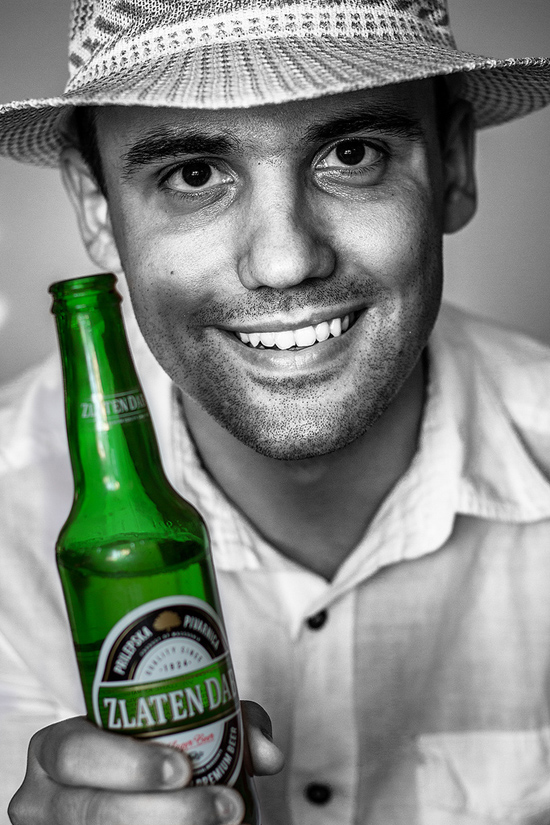 According to new research published in the journal Clinical Psychological Science, drinking alcoholic beverages makes men more responsive to the smiles of others in their social group.
The findings suggest that men may be more inclined to use alcohol to increase their sensitivity to social behaviours including smiles to connect with others. This may contribute to problem drinking among men.
“This experimental alcohol study, which included a social context, finds the clearest evidence yet of greater alcohol reinforcement for men than women,” says psychological scientist and lead researcher Catharine Fairbairn of the University of Pittsburgh.
“Many men report that the majority of their social support and social bonding time occurs within the context of alcohol consumption,” says Fairbairn. “We wanted to explore the possibility that social alcohol consumption was more rewarding to men than to women — the idea that alcohol might actually ‘lubricate’ social interaction to a greater extent among men.”
The researchers decided to examine smiles in particular over other channels to indicate bonding because the nonverbal cue can be measured objectively and it is often infectious.
In the study, genuine or “Duchenne” smiles which are though to represent actual felt emotions, rather than simple polite smiles (non-Duchenne smiles) were measured during a drinking game.
In total 720 healthy social drinkers aged 21-28 were placed in one a group of three and then randomly assigned to one of three conditions: an alcoholic beverage (vodka cranberry), a non-alcoholic beverage, or a non-alcoholic “placebo” beverage that was described as alcoholic.
Video recordings of the interactions were later analyzed for smiling behaviour.
Interestingly, the researchers found that alcohol significantly increased the contagiousness of the smiles, but only for the all-male group. The all-female groups were not significantly affected by alcohol.
The findings suggest that alcohol works akin to a sort of “social bravery” among men.
Alcohol, say the researchers, seems to liberate men permitting them to respond to other people’s smiles more freely.
These results raise important findings with respect to drinking behaviour and particularly with how one uses alcohol as an addictive agent in ones life.
“Historically, neither the scientific community nor the general public has been terribly concerned about drinking that occurs in social settings. According to popular opinion, a ‘social drinker’ is necessarily a non-problem drinker, despite the fact that the majority of alcohol consumption for both light drinkers and problem drinkers occurs in a social context,” Fairbairn explains.
“Not only that, the need to ‘belong’ and create social bonds with others is a fundamental human motive,” she adds. “Therefore, social motives may be highly relevant to the understanding of how alcohol problems develop.”
From a body language perspective, however, the findings are important since they highlight the gender differences in smiling. Since alcohol relaxes men’s inhibition around smiling, permitting them to do it more often and connect with others, it supports the idea that smiling is something men routinely inhibit by their very nature. In other words, only when a man is artificially uninhibited is he better able to take part in social smiling.
One is forced to wonder if men could by-pass their inhibitions to smile and therefore bond with others, if they could create more cohesive social connections – not unlike those commonly associated with women. On the other hand, perhaps smiling and bonding, for men, is only permissible under certain cultural rules – and part of that involves social drinking.
Image Credit: Marjan Lazarevski
Resources
Fairbairn, Catharine E.; Michael A. Sayette; Odd O. Aalen and Arnoldo Frigessi. Alcohol and Emotional Contagion: An Examination of the Spreading of Smiles in Male and Female Drinking Groups. Clinical Psychological Science. 2019. DOI: 2167702614548892