
Moving Through Time – Embodiment Of Time Travel Through Body Lean
Christopher Philip
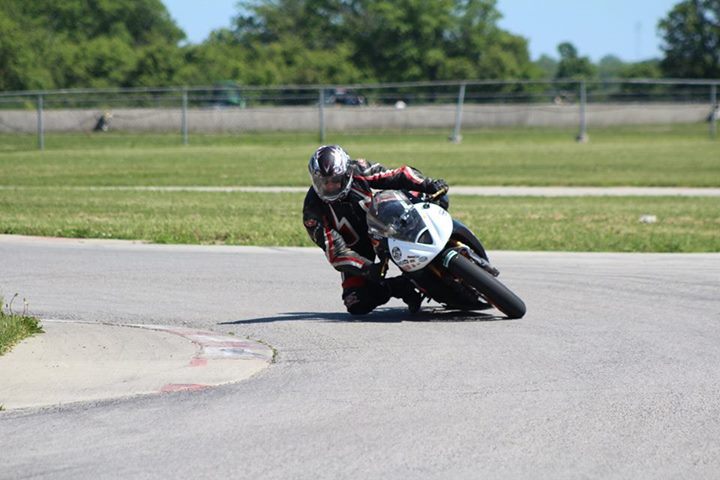
Not only does leaning forward on a bike make it more aerodynamic, but it is also how we embody forward thinking. We move forward when imagining the future, and lean back when thinking of the past. Photo credit: Steve Chapman flying through time.
Researchers Lynden Miles, Louise Nind and Neil Macrae, University of Aberdeen have found evidence linking the embodiment of thinking about the past and future.
In a simple experiment, subjects were fitted with a movement sensor, blindfolded, told to keep their feet at shoulder width with their arms at their sides and then instructed to imagine either life in the past, or life in the future. The blindfold was to encourage greater imagery.
As part of the exercise the subjects were told to either (a) recall what their everyday life circumstances had been like 4 years previously and to envisage the events of a typical day or (b) imagine what their everyday life circumstances might be like 4 years in the future and to envisage the events of a typical day at that time.
They were recorded in intervals of 15 seconds.
The researchers hypothesized that the subjects would react by leaning forward when projecting thought into the future and lean backwards when recalling thought from the past (i.e., past = back, future = forward).
Their idea is based on the relatively new scientific field of embodied cognition which says that our minds think with the help of metaphors and that our bodies are an integral overall part of our how we work.
 The results showed that the direction that people moved through space depended upon their thought. Retrospective thought, thinking about the past, resulted in subjects leaning backwards whereas prospective though, thinking about the future, resulted in subjects leaning forwards.
“In this way, the embodiment of time and space yields an overt behavioral marker of an otherwise invisible mental operation,” say the researchers in their paper.
The researchers suggest that future study might examine if far future thought and far distance past leads to even greater sway.
Resources
Lynden K. Miles, Louise K. Nind, and C. Neil Macrae. Moving Through Time. Psychological Science. 2019; 21(2): 222-223. DOI: 10.1177/0956797609359333
Learn More Starting Today!
Learn the basics of body language quickly and easily by taking one of our tailor-made video courses!
Short on cash? Then read an ENTIRE comprehensive book on body language – it’s totally FREE!
Which body language video course will you start with?
1. “The Secrets of Body Language”