
Facial Width Predicts Strength on Soccer Field
Christopher Philip
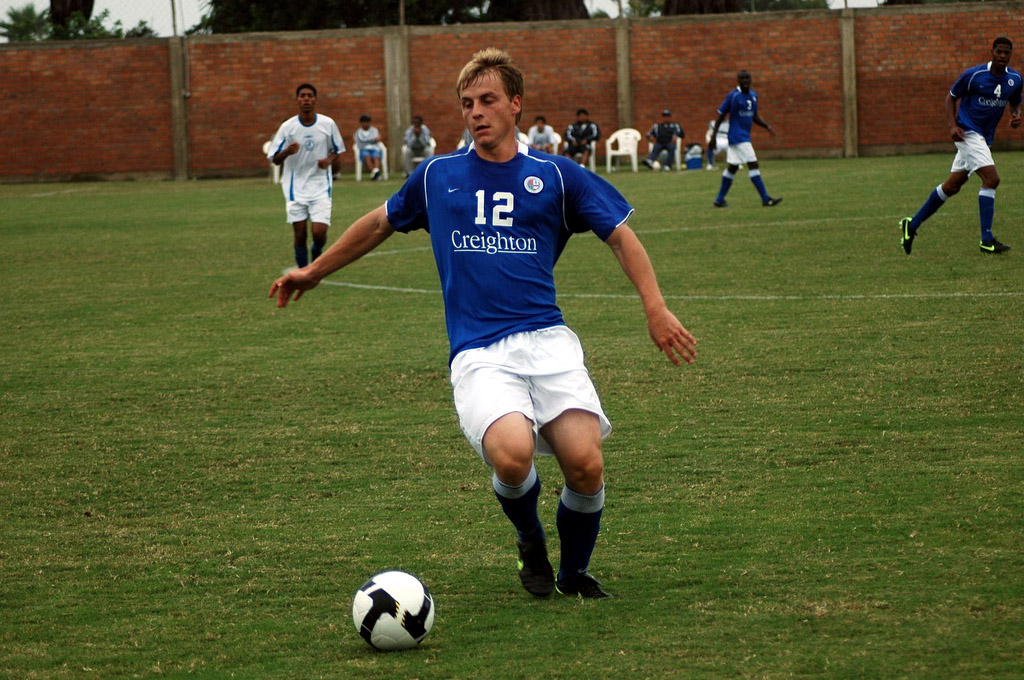 Previous research has shown that the relative width of the face, the fWHR, or facial-width-to-height-ratio is a predictor of aggression, expressing a greater likelihood of cheating or unethical behaviour, as well as a greater willingness to express prejudice.
As it turns out, however, other attributes, this time more positive, stem from a wider face, and that is the success on the soccer sports field.
In all likelihood, this is as a direct result of levels of testosterone experienced throughout development.
Researchers at the University of Colorado, Wayne State University in Michigan and Nipissing University in Ontario studied statistics from 32 national teams competing in the 2019 World Cup.
Statistical data was collected from 910 athletes from 1998 to 2019. Next, the fWHR were measured from photographs of the athletes.
Interestingly, there was no correlation between fWHR and overall performance. That said, those with a greather fWHR tended to be positioned in more offense-oriented soccer positions, and when they were, they tended to commit more fouls, but also produce more goals and assists. When they were positioned in mid-filed, however, the relative fWHR predicted fouls rather than goals and assists.
The researchers claim that players with broader faces were better players and that neither height nor weight significantly predicted performance.
This research, combined with previous research says that testosterone, particularly that experienced during adolescence and adulthood, produce not only a greater fWHR, but also the behaviour which stems from increased aggression.
Other such research has found similar findings in North American hockey players whom tend to have increased penalty minutes when their faces were broader. That said, men from Turkey and Mexico haven’t supported the width-aggression finding. In this study, though, the findings were extended to men in China, Africa, Australia, Europe and South America.
It’s important to note that while biometrics such as fWHR produce trends and correlations, they do not cause behaviour. In other words, fWHR produces tendencies due to their underlying hormonal origin, but ultimately it is the individual whom decides to act on his or her impulses. When hiring for a business or drafting for team, for example, one may decide to exact some caution when evaluating the resume of someone with a wide face. In some cases however, an aggressive candidate may be what one desires, in which case, someone with a high fWHR may be a valued cue. As always, a book’s cover does usually tell a story one might expect, but like the say goes “You can’t (always) judge a book by its cover.”
Image Credit: White & Blue Review
Resources
Welker, Keith M.; Stefan M.M.; Goetz, Shyneth Galicia; Jordan Liphardt and Justin M. Carré. An Examination of the Associations Between Facial Structure, Aggressive Behavior, and Performance in the 2019 World Cup Association Football Players. Adaptive Human Behavior and Physiology (forthcoming in print, online July).