
The Nonverbal Meaning Of Coy Smiles In Infants
Christopher Philip
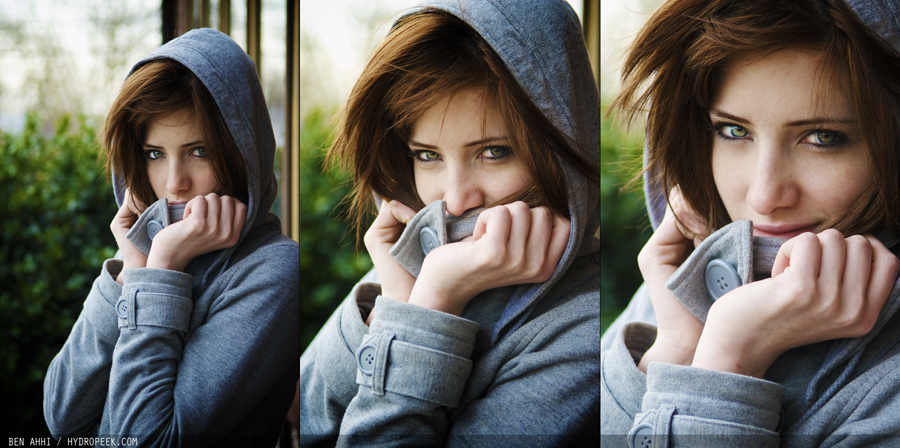 We know that infants as young as 1-2 months begin to smile. We also know that there are several different kinds of smiles including the The Duchenne smile which involves eye constriction. This kind of smile is linked to joy and true happiness. A smile without eye involvement is said to be the result of more cautious engagement. Another smile altogether is the coy smile which is characterized by a turned head just as the smile is about to reach its apex.
This smile is believed to show a mix between feelings of pleasure and aversion. As such, a coy smile shows that we are content, but otherwise feel some form of embarrassment.
There are also two types of shyness. “Trait shyness” refers to personality. These can lead to introversion as well as, in extreme cases, social anxiety.
“State shyness” is an emotion rather than a description of a personality. This kind of shyness is passing and highly dependent on the current situation or environment. In adults and children, shyness takes the nonverbal form of gaze aversion, blushing, soft voice and so forth.
In infants, we also see shyness. This is expressed nonverbally as smiles with gaze or head aversion and arm raising.
There is much debate about when shyness arises. Some feel that it is tied to cognitive development, not arising until the child can truly understand the conscious self as a social object (at around age 5). This is a more mature form of shyness. However, a more simple version of shyness is seen at 15-18 months of age resulting from embarrassment and fear. At age 3 another form of embarrassment and shyness arises which is the result of self-evaluation.
To extend the findings of this early research and uncover the purpose of coy smiles in infants a team of researchers led by Cristina Colonnesi, Research Institute of Child Development and Education, University of Amsterdam examined the reaction of 4-month old infants under three experimental procedures:
(1) The infant only sees him or herself (in a mirror),
(2) The infant only sees the other person (mother, father, or stranger), and
(3) The infant sees both him or herself and the other person.
The results showed that infants produced more coy smiles during interactions with strangers, than with their mother of father or while seeing themselves in the mirror. However, infants produced more coy smiles when they could see their own reflection than when they could not.
This suggests, say the researchers, that coy smiles function as “an early emerging emotional reaction with an important adaptive function during social situations involving novel persons and when special attention is given to the child.”
The results also found that coy smiles occurred with a combination of gaze and head aversion coupled with uncontrolled movements of hands, arms and upper chest.
The researchers say that this is similar to the coy version seen in adults but adults are better at controlling or suppressing their smile. Adults they say also tend to suppress their smiles and also look down to avert their gaze or cover their mouth with their hand.
According to the researchers, the coy smile is a nonverbal signal displaying intense and ambivalent emotions producing heightened arousal. Infants turn their head just as the smile reaches maximum intensity as a way to manage their high level of arousal which is in conflict with their emotions generally.
“In our view, the coy smile might be an adaptive strategy to cope with the ambivalence between the enjoyment of a specific social situation and at the same time the urge to avoid it.”
“In sum,” say the researchers, “young infants seem to be already able to associate their arousal response to specific social stimuli and to react with a coy smile, which is a way to reduce the arousal (through the aversion), without affecting the social interaction negatively (through the smile).”
Does this mean that a child who produces plenty of coy smiles is socially awkward?
On the contrary say the researchers. In fact infants who produce more coy smiles demonstrate an ability to understand social situations which makes the infant “socially sensitive and competent.”
Image Credit: Ben Ahhi
Resources
Colonnesi, Cristina; Susan M. Bogels; Wieke de Vente and Mirjana Majdandzic. What Coy Smiles Say About Positive Shyness in Early Infancy. Infancy. 2019. 18(2): 202–220. ISSN: 1525-0008 print / 1532-7078 online
DOI: 10.1111/j.1532-7078.2019.00117.x