
Facial Expressions As Honest Signals – How Smiling and Contempt Predict Cooperation and Defection
Christopher Philip
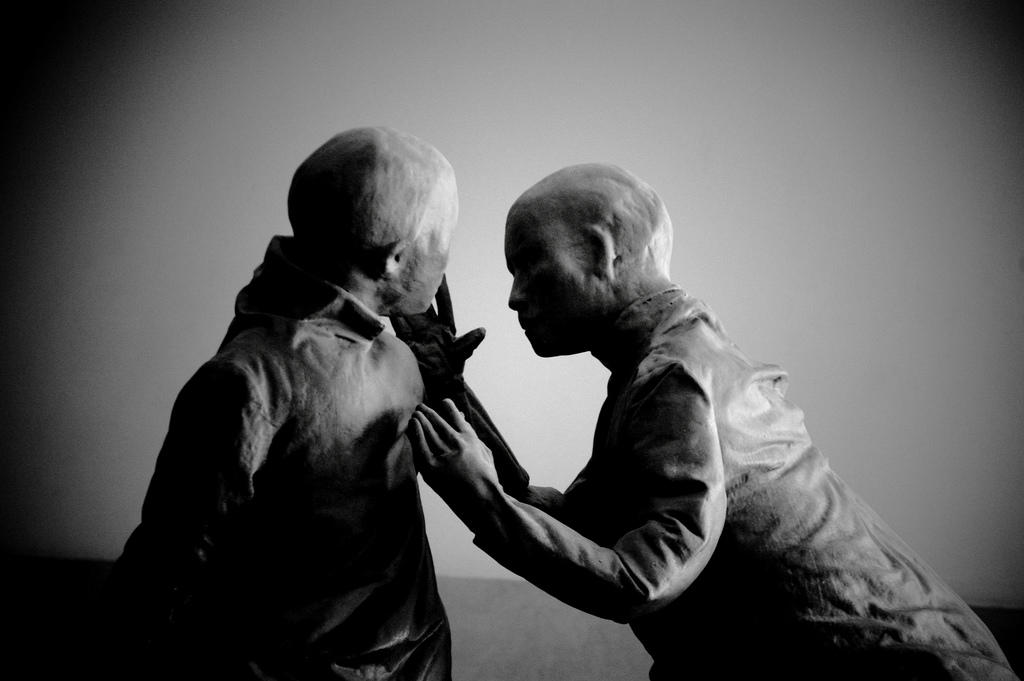 A team of researchers led by Lawrence Reed, McLean Hospital has found that people accurately detect cooperation with cues visible in the face.
The study had participants take part in a one-shot Prisoner’s Dilemma game. The game relies on individual moves to determine the outcome. Participants may decide to either defect or cheat or cooperate. Their decisions affected their earning. If both cooperated, the outcomes were shared, if both defected, then neither received a share, but if one cooperated and the other cheated, the cheater received twice the spoils.
However, before placing their decision in the game, the participants met for a 10 minute acquaintance period. Subjects were instructed to use this time in a manner that would help them deicide how they would play the game. They were also told to glean clues as to how their opponent in the game would react – to cooperate or defect. This interaction was videotaped and the participants were made aware of this fact.
The results found that both participants cooperated in 44 (55.7%) pairs, one participant cooperated in 9 (11.4%) pairs, and neither participant cooperated in 26 (32.9%) pairs. They also found that nearly 80% of those verbally promising to cooperate did in fact do so, while only 50% of those who did not agree, actually did.
The data also found that the participants were accurately able to predict the behaviour of others in the Prisoner’s Dilemma game.
The data also showed that as the frequency with which genuine Duchene smiles occurred during the acquaintance period, the greater the chances of actual cooperation.
In fact, “the odds ratio (OR) of 1.269 suggests that for each second that the sender displayed a Duchenne smile, the odds of the sender’s cooperation increased by nearly one and one third.”
Put another way, the odds of defecting by the sender of a Duchenne smile was reduced by more than 20%.
The data also found that a non-Duchenne smile was more likely to be displayed during promises by those whom were actually going to cooperate. The OR for the non-Duchenne smile was 1.163 which says that for each second the sender displays the smile there is a 1-1/3 increase in odds of cooperation. Said differently, the odds of defection is reduced by 15% with each second of a non-Duchenne smile.
Conversely, one main negative signal was predictive of defection and this was the contempt expression. Contempt is characterized by flexing the brows down and pressing the lips together (Action Units 4+24+14).
The OR of 0.4 suggests that for each second that the sender displays contempt, the odds of cooperating drops by 60%. This represents a 2.5 times greater frequency of defection with each incidence.
Overall, the results demonstrate that smiling is a prosocial behaviour and that those who display it are likely to cooperate. Conversely, the contempt expression is a demonstration that one may wish to cheat and be uncooperative toward a shared goal.
Image Credit: Feliciano Guimarães
Resources
Reed, Lawrence Ian; Katharine N. Zeglen and Karen L. Schmidt. Facial Expressions as Honest Signals of Cooperative Intent in a One-Shot Anonymous Prisoner’s Dilemma Game. Evolution and Human Behavior. 2019. 33: 200-209.