
Anger As A Nonverbal Cue To Truth Telling
Christopher Philip
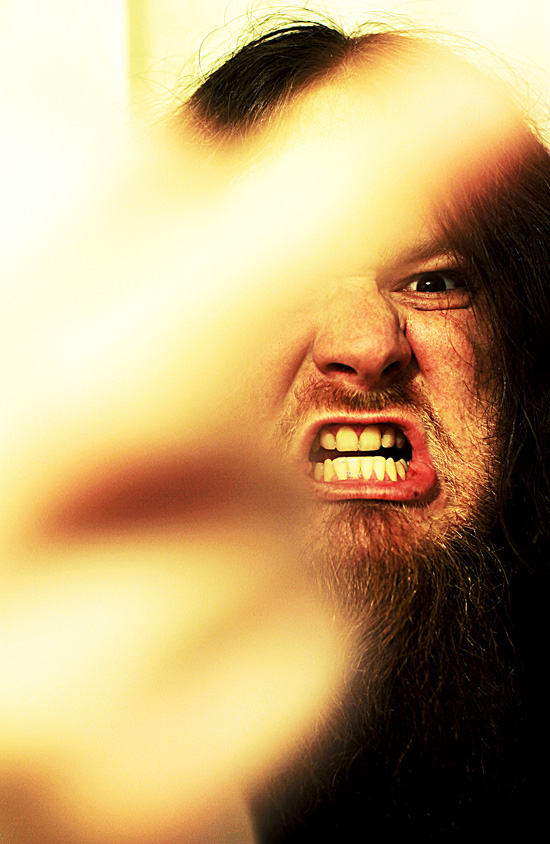 Research has been consistent in that negative nonverbal signals have been associated with lying. Liars are less cooperative, show more fear, nervousness and hostility than truth-tellers. Additionally, cues such as fidgeting and fear, sweating, and so forth indicate arousal and when someone is aroused, versus relaxed, they are likely to be showing discomfort due to lie telling.
Thus, it would seem that negativity overall is a signal that someone is lying. However, Ekman has asserted that anger is one such cue that is difficult to feign and thus, despite its origins as a negative signal, may actually showcase truth-telling rather than lying.
This rational stems from the fact that a person who is falsely accused of a wrong doing should react naturally by expressing fear, disgust, and anger, rather than indifference. By extension, the expression of fear, disgust and anger, being difficult to control, should manifest as nonverbal facial expressions showcasing truth-tellers.
Until now, this phenomenon has not been empirically researched. The likely reason is that it is difficult to replicate situation in lab settings that elicit anger from a wrongful accusation. Usually, those wrongfully accused in a lab setting are not vested in protecting their good-names so do not react naturally.
The researchers put it best by saying that “Empirical examination would require the elicitation of the types of lies told in real-world, high-stakes settings – the liar must believe he/she is actually being accused of a transgression, and must also be motivated to convince the accuser of their innocence.”
In the current study researchers Jessica Hatz and Martin Bourgeois, Florida Gulf Coast University, Fort Myers, FL, set up an experiment which better mirrored the real life condition.
Here they had subjects decide for themselves if they were to commit a (real) transgression or not, then chose whether to lie about it. This was compared to a condition in which participants committed a mock wrongdoing (as opposed to a real transgression) – or not – and then, according to the experimenter’s instruction, either feign or truthfully maintain their innocence. Nonverbal and verbal cues were examined and it was expected that the truth-tellers would appear more angry than the liars.
Indeed, this is exactly what the results showed: truth-tellers appeared more angry than liars and also used more angry words.
However, these results where only evident when the participants really believed that they would be in trouble – the “real transgression.” In the mock transgression, that is when the subjects did not believe they would be in trouble no such effect was found.
Thus, asserting that anger, a negative emotion, delineates lying is risky at best or outright inaccurate at worse.
The researchers note that previous studies have used monetary rewards as incentive to lie and while they do boost the intensity of the emotions, true motivation comes from protecting one’s identity or positive self-concept.
In other words, when the good-will of a person is under attack due to a (false) accusation, a person rightfully feels anger and shows this via nonverbal and verbal emotions.
This raises concerns with respect to the use of the polygraph which functions by measuring arousal generally. As seen in this study, anger overall is a cue to general arousal and this may trigger a false positive rendering the assessment inaccurate.
Finally, the researchers point out that nonverbal cues in the real transgression condition appeared significantly angrier than those in the mock transgression condition whereas those in the mock paid transgression condition used more anger words than those in the real transgression condition.
This suggests that nonverbal behaviour particularly negative facial expressions were more difficult to feign than spoken cues.
Image Credit: Isengardt
Resources
Hatz, Jessica L. and Martin J. Bourgeois. Anger as a Cue to Truthfulness. Journal of Experimental Social Psychology. 2019. 46: 680-683.