
How To Read Kid’s Dislike For Food – Facial Expressions Accurate For Detecting Dislike But Not Like In Children
Christopher Philip
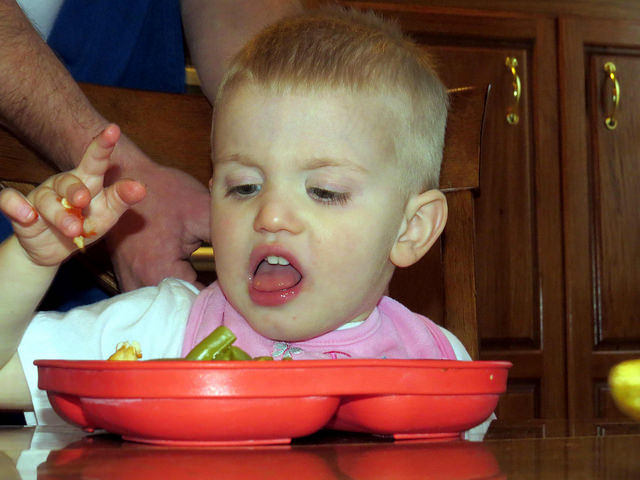 Dutch researchers tested children aged 5-13 on the accuracy of their facial expressions as they sampled various foods to see if their facial expressions could covey their likes and dislikes.
Interestingly, the researchers found that only the dislikes for food matched with their real preferences, while their likes poorly matched. This suggests that when food is disliked, it produces a more accurate and visceral response than when it is liked.
In the experiment, the children were video-recorded sampling various foods including apple, sauerkraut, and beetroot juice, skimmed milk, asparagus solution, a bitter
and a sweet solution. The facial expressions where then coded using FACS-system Action Units (AUs) which tracks muscles used in various facial expressions.
The results clearly showed that for disliked liquids, the majority of the AUs where negative, whereas the liked liquids were both positive and negative.
It is well known that children are eager to please adults and will actively work to hide their distaste for specific foods. However, while children might verbally reveal their like of a specific food, their facial expressions may reveal the true story and betray their dislike.
The current research matches previous research for newborn infants whom have been shown to react similarly to various foods. For example, newborns will react to a sweet taste with facial relaxation, sucking, tongue protrusion and smiling, whereas sour foods lead to lip pursing. Bitter tastes elicits head turning, mouth gaping, nose wrinkling and lowered mouth corners. Salty, on the other hand, shows a less distinctive pattern.
More broadly, these expressions are characteristics of adaptive responses because they signal to others specific emotions. Additionally, they form cues signaling approach and avoidance. For example, a maximally negative-avoidance-reaction includes gaping, nose wrinkling, head shaking and a cry-face. A positive reaction, on the other hand, consists of tongue protrusion, sucking, lip smacking and a relaxed or smiling face. Similar reactions have been noted for various odors.
That these reactions are not taught suggests that they are biological in origin. Additionally, while they may be born out of specific function such as displaying reaction to foods – good or bad – they have found a place with delivery of emotion, both good and bad.
Studies such as this demonstrate to us the origin of emotional expression and how they are born from food and odor but are later transcribed to specific underlying emotion. For, just as one might show disgust toward a particularly foul smell or taste, one may also show disgust toward a particularly foul idea or statement.
Image Credit: Steve Baker
Resources
Zeinstra, Gertrude G.; M.A. Koelen; D. Colindres ; F.J. Kok; C de Graaf. Facial Expressions in School-Aged Children are a Good Indicator of ‘Dislikes’, but not of ‘Likes.’ Food Quality and Preference. 2019. 20: 620-624.