
Detect Lies With Whole Body Nonverbals – New Lie Detector Successful Using Body Language At Over 70%
Christopher Philip
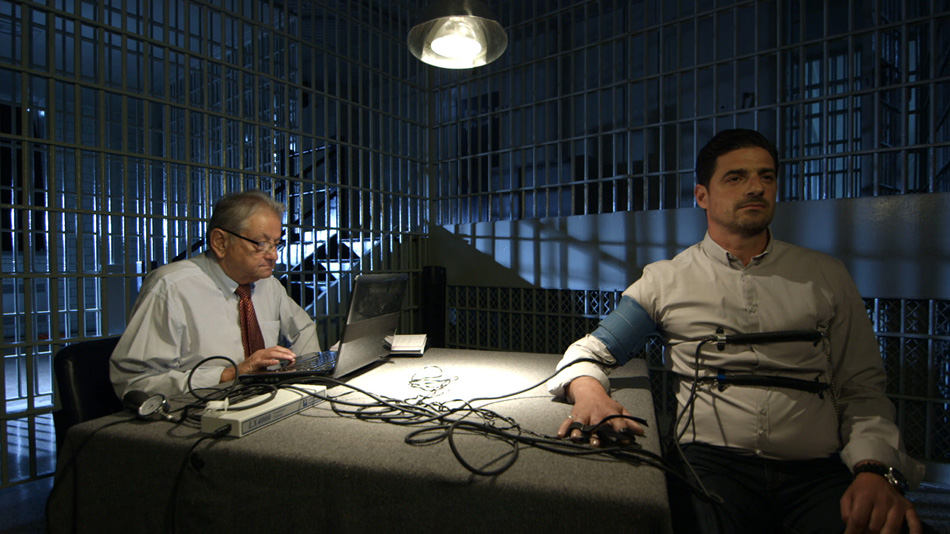 British and Dutch researchers have devised a new lie detector that claims an astounding 70 percent success rate. The new detector tracks the entire body including its motion to predict whether or not someone is guilty.
The researchers point out in their study that previous lie detection techniques such as the polygraph which compares baseline levels of hear rate, sweating and breathing amounts to only about 60 percent success whereas those relying on human judges of visual cues including fidgeting and gaze aversion normally fair far worse at only chance levels of 50 percent.
The current technique uses a whole body motion capture suit which contains 17 censors which records position, velocity and orientation of 23 points in the subject’s body up to 120 times per second.
Results found that the full body motion including the sum of the joint displacement was indicative of lying approximately 75% of the time.
They also found that this movement was guilt-driven but independent of cognitive load or cultural background as it tracked South Asian and White British subjects.
Even more, when the body motion tracking suit was combined with appropriate questioning strategies combined to produce an 82% success rate.
“It appears that full body motion can be a robust nonverbal indicator of deceit, and suggests that lying does not cause people to freeze,” say the researchers in their paper.
“However,” they continue “should full body motion capture become a routine investigative technique, liars might freeze in order not to give themselves away; but this in itself should be a telltale.”
“The takeaway message is that guilty people fidget more and we can measure this robustly.”
According to Mr. Anderson, one of the studies co-authors their first attempt found that liars tended to wave their arms more. However, this factor by itself only helped to distinguish liars from truth tellers at a rate of only 60 percent and this is what you get from a conventional polygraph.
“The paydirt was when we considered total body motion. That turns out to tell truth from lies over 70 per cent of the time, and we believe it can be improved still further by combining it with optimal questioning techniques.”
The results are clear; liars spend more time waving their arms about. But why is this so?
The researchers speculate that due to the heightened emotions occurring while lying boosts physical arousal which results in more self adaptors (such as adjusting the hair, or clothing and so forth), fidgeting, and eye-blinking. Since the subjects reported the task as more difficult than telling the truth, it could be that the liars were moving their body around in response to nervousness so as to self-sooth.
Image Credit: Lwp Kommunikáció
Resources
Van Der Zee, Sophie; Ronald Poppe; Paul J. Taylor; and Ross Anderson. To Freeze or Not to Freeze A Motion-Capture Approach to Detecting Deceit.
To download and read more about this research, click HERE.