
People With Tattoos and Piercings Think You’ll Find Them More Attractive
Jenny Galvao
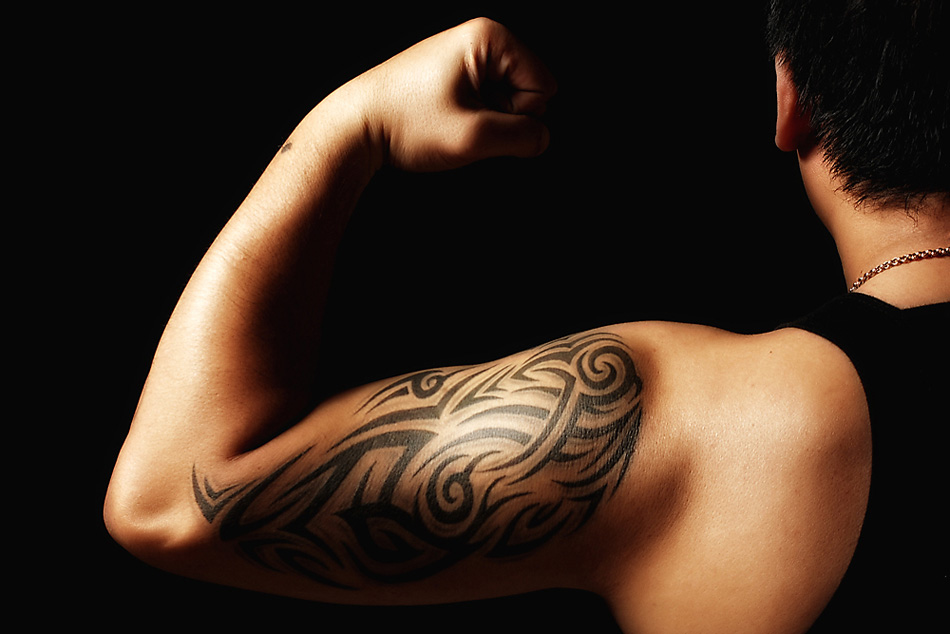 Based on research completed by Slawomir Koziel and Arkadiusz Sitek, individuals with body decorations (tattoos, and piercings) view the attractiveness of different parts of their bodies higher than those individuals without body decorations.
Both males and females feel that their body decorations signal a superior biological quality. Those sporting tattoos and piercings see them as making individuals (even themselves) far more attractive than individuals who do not have them.
The scientific theory which supports this is called the “adaptive pathogen-driven sexual selection hypothesis.” By this theory and as described by the researchers in their paper “scarification practices (including tattooing and body piercing) increase the risk of infections, and therefore individuals undergoing such procedures express their resistance to pathogens.” This signals higher biological quality.
In this experiment, male and female individuals with tattoos, piercings, or both, participated as one group. A second group with no tattoos or piercings was used as the control group. Each group completed self-assessments, and several questions asked them to assess, using a scale of 1-7 (1 being very unattractive, and 7 being very attractive), their specific body parts (face, eyes, buttocks, etc.), and if they’d had any tattoos or piercings in those places.
The results highlighted that in nearly every case, the group of individuals with tattoos/piercings regarded themselves as more attractive (regardless of where their own decorations were located) than members of the control group, except for the abdomen, chest, feet, and hips.
There are numerous reasons why individuals choose to obtain tattoos/piercings; cultural reasons, to show a high pain tolerance, as a personal choice or a form of self-expression/individuality, and, as mentioned earlier, (and in theory) to show a resistance to pathogens. The participants with tattoos and/or piercings had them as acts of self-creation/an expression of individuality, which aligns with them being perceived as more attractive.
The takeaway message is that if you choose to get a tattoo/piercing, the probability is high that you find piercings/tattoos to be attractive, otherwise, you wouldn’t choose to put one on your own body.
Aside from the pathogen-driven sexual selection hypothesis mentioned above, the researchers also explain that “scarification serves the purpose of attracting the partner’s sexual attention — the purpose of body decoration is the enhancement of an individual’s physical and sexual attractiveness”.
So, individuals who have tattoos or piercings do rate themselves as more attractive, but is this because they feel that their body decorations make them more attractive? Or is it instead due to the fact that they find themselves to be more attractive to begin with, and so they choose to get tattoos and/or piercings just to show off even more?
From this research, it’s impossible to pinpoint the exact cause. That being the case, however, we can still deduce that individuals with body decorations find them to be a signal of superior biological quality, and that because they have tattoos and piercings, that they believe that it translates into greater personal physical attractiveness.
So next time you see a man or woman with body decoration, to win them over, be sure to compliment their art.
 About the Author: Jenny Galvao is an undergraduate student at the University of Guelph studying psychology.
Image Credit: Jhong Dizon
Resources
Koziel, Slawomir and Arkadiusz Sitek. Self-Assessment of Attractiveness of Persons with Body Decoration. Journal of Comparative Human Biology. 2019. http://dx.doi.org/10.1016/j.jchb.2019.04.004