
Get It Out Of The Way – Nonverbal Hastening And Hiding During Soccer Penalty Kick
Christopher Philip
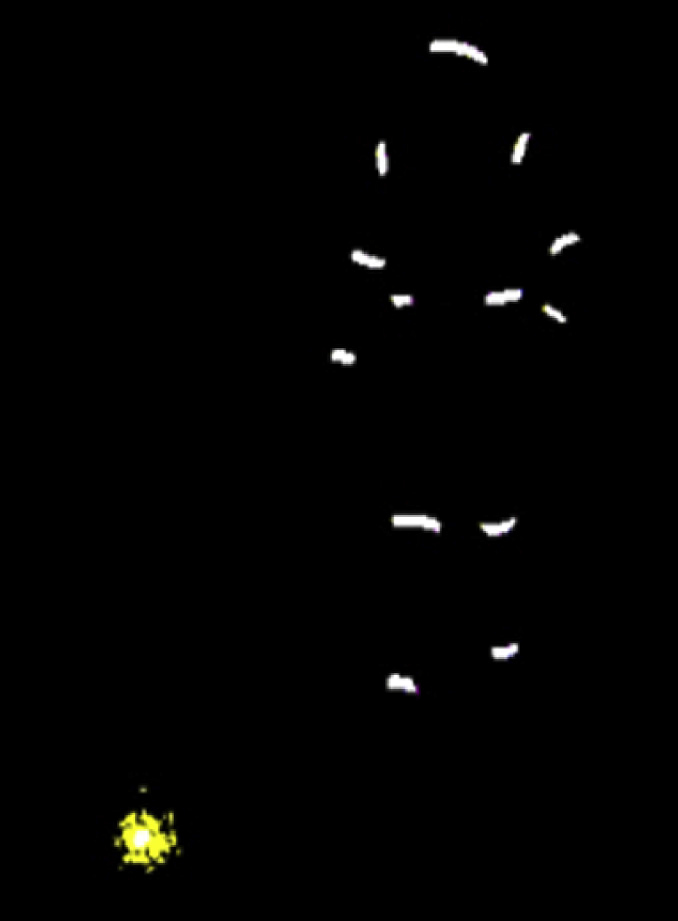
Example frame from the stimuli used in the study.
Researcher Philip Furley, German Sport University, Cologne, Institute of Cognitive and Team/Racket Sport Research, Am Sportpark Müngersdorf, Germany led a team of researchers in a study examining the nonverbal behaviour of players waiting to take part in a penalty kick.
The penalty kick is one of the most exciting and important events in soccer because it often dramatically changes the outcome of the game.
This makes it an ideal phenomenon to study with respect to nervous body language.
The researchers looked at specific nonverbals related to a penalty kick referring to them as hastening and hiding typified by a short preparation speed, and negative looking behaviour where the penalty taker did not look toward the goalkeeper as they prepared for their run-up. These are collectively referred to as avoidance behaviours.
Previous studies have shown that when reduced preparation was taken leading up to the kick, the outcome suffered.
Naturally, taking a penalty kick creates stress, discomfort and anxiety, where the taker aims to get the task out of the way as quickly as possible such that they may begin to deal with the outcome – be it good and celebrate, or bad. Regardless, it is the unknown that causes discomfort.
Other studies have shown that the longer the wait time, the more likely a person is to fail, especially on tasks involving sensorimotor skills (such as a golf putt) as a person puts too much emphasis on analysis thereby disrupting natural learned motor skills which can not function as quickly as our bodies can on their own. This explains why some athletes choke in sports.
However, in the case of a penalty kick, there is a notable interaction and feedback loop between the goal keeper and the player such that each affects the outcome.
In previous research, it was found that those who used gaze for only 10% of the time toward the goalkeeper versus 90% of the time, were perceived as being less likely to execute the kick with success.
In the current study, the researchers wished to assess the effects of hastening and hiding behaviours on the outcome of the kick as well as the perception of the keeper about the player. In other words, they wished to assess if the nonverbal behaviour of the soccer player would lead to other’s judging them as less competent and capable possibly contributing to the outcome of the kick.
In the first study, a penalty taker was converted into ‘point light’ by using reflective markers placed on a black suit. This reflected back areas such as the arms, knees, feet, hips, arms and head. The penalty taker was instructed to modify his looking behaviour (toward the keeper) and the duration of the preparation time (time the player stood before they commenced the run-up).
Results showed that goalkeepers associated the hastening and hiding behaviour of penalty takers with inferior penalty taking abilities. On the other hand, those who took their time and faced the goalkeeper when preparing for their kick were perceived to be more likely to succeed.
In the second part of the experiment, experienced soccer plays formed the stimulus and the participant rated the likelihood that they would succeed based on their nonverbal traits. Results confirmed those found in the first part, in that those who took more time to prepare but only if they didn’t turn their backs toward the goal, were perceived as most confident. When they turned their backs to the goal, it was the intermediate condition that scored best.
Overall, those who display nonverbal hastening and hiding behaviours during the penalty kick were perceived to execute less precise kicks in comparison to those who took longer and looked toward the goal.
Previous studies have shown that gaze behaviour toward the goal does indeed produce better kick accuracy suggesting that observers are actually picking up on the cues in a beneficial way.
In the second experiment performance was analyzed. Though they did not find that taking more time led to a more successful outcome, they did find that those who exhibited hastening and hiding behaviours induced the goalkeepers to make their moves in a more delayed fashion suggesting that they felt that they were to experience an easier save than when no avoidance behaviours were observed. The researchers clarify that because of a lack of anxiety during the kicking situation, that it may have resulted in the null finding with respect to success. In other words, during high anxiety, taking one’s time may have produced a more noticeable outcome rather than rushing the shot.
The results show, that overall, there are two moving parts. While the player relies on movements initiated by the goalkeeper, the goalkeeper relies on movements of the penalty taker. Each party provides clues and hints as to the outcome of the event and each careful weigh their tactics. Though, in this case, it seems as if taking ones time is the best recourse as this signifies strength through a lack of anxiety.
The researchers suggest that “Coaches should assist athletes to develop positive self presentation techniques in order to potentially induce a desired impression of themselves during interpersonal perception and action.”
Indeed, nonverbal behaviour has far and reaching consequences – in life and sports!
Resources
Furley, Philip; Matt Dicks; Fabian Stendtke and Daniel Memmert. “Get it out the Way. The Wait’s Killing Me.” Hastening and Hiding During Soccer Penalty Kicks. Psychology of Sport and Exercise. 2019. 13: 454-465.