
Think Before You Ink, or Pierce – What Tattoos and Piercings Tell About Alcohol Consumption
Jenny Galvao
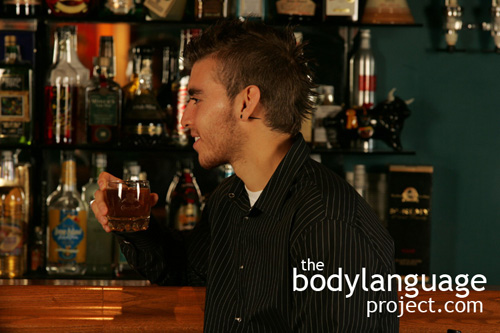 Based on research by Nicolas Guéguen of the University of Bretagne-Sud, there is a link between tattoos, piercings, and alcohol consumption. More generally, tattoos and piercings were found to be connected to questionable and risky behaviour.
This experiment was conducted on several Saturday nights at popular bars for youth. As individuals were leaving a bar, they were asked to blow into a breathalyzer, and report if they had any tattoos or piercings.
Over 3,000 individuals obliged, and almost 2,000 agreed to use the breathalyzer.
Results showed that the individuals who had piercings or tattoos (though there was not an abundance of these individuals) did consume slightly more alcohol on average than those without tattoos.
Tattoos and piercings send many nonverbal messages; most of them signaling a sense of freedom and open expression. But it also seems that tattoos and piercings indicate how much alcohol a person consumes, which is viewed by society as a negative quality reflecting recklessness and negligence for responsibility.
In the paper, Guéguen says that “pierced and/or tattooed individuals had consumed more alcohol in bars on a Saturday night than patrons in the same bars who were non-pierced and non-tattooed. This effect was found regardless of the participants’ sex.”
While the experiment is not particularly far reaching, it does say that tattooed and pierced individuals are more inclined to consume alcohol on the weekend.
Guéguen raised a fair point, stating that “it could be argued that, perhaps, tattooed and pierced individuals overreported risky behaviour to act in conformity with people who perceived them as unconventional and/or nonconformist. Our study, therefore, sought to examine real alcohol consumption in bars depending on whether patrons displayed tattoos and/or piercings on their body”.
It appears that we can predict certain things about individuals who have tattoos or piercings because of the nonverbal signals they send. Voluntary body modifications not only convey a longing for beauty or to test an individual’s pain endurance, but a sense of rebellion from both society as well as “parental” forces. Body modification is also connected to an increase in behaviour that society frowns upon or just finds to be inappropriate and irresponsible.
If a picture is worth a thousand words, than a person covered in permanent ink is able to tell an entire story without having spoken a single word. However, the story they tell is not up to interpretation, but rather, the metaphorical words represent a lack of concern and the will to engage in questionable behaviour.
While people may wish to express themselves in unique ways and feel that a tattoo can represent individual expression, it often simply moves them from one category, tattoo-free, to tattooed. As we see, it is possible to make blanket assumptions by reading the nonverbal messages painted across a person’s body and that message says – I take part in risky behaviour including alcohol consumption.
So before inking your body, think about what a specific tattoo or a certain piercing says about you before you proceed to make the permanent decision. While your propensity to ink or hole your body is probably a matter out of your direct control (hormones, past history, personality, etc.), tattoos and piercings tell a story to the viewers no matter what you intend. As most people who engage in body art and modification are risk seeking, these attributes will also be connected to you – even if undeserved.
In the end, tattoos and piercings are external cues and are perfectly “elective” nonverbal signals meaning that they say something about you, and often even before you get a chance to open your mouth.
 About the Author: Jenny Galvao is an undergraduate student at the University of Guelph studying psychology.
Resources
Guéguen, Nicolas. Tattoos, Piercings, and Alcohol Consumption. Alcoholism: Clinical and Experimental Research. 2019. 36(7): 1253-1256. DOI: 10.1111/j.1530-0277.2019.01711.x