
Can You Tell Who’s Boss By The Nonverbal Expression Of Pride?
Christopher Philip
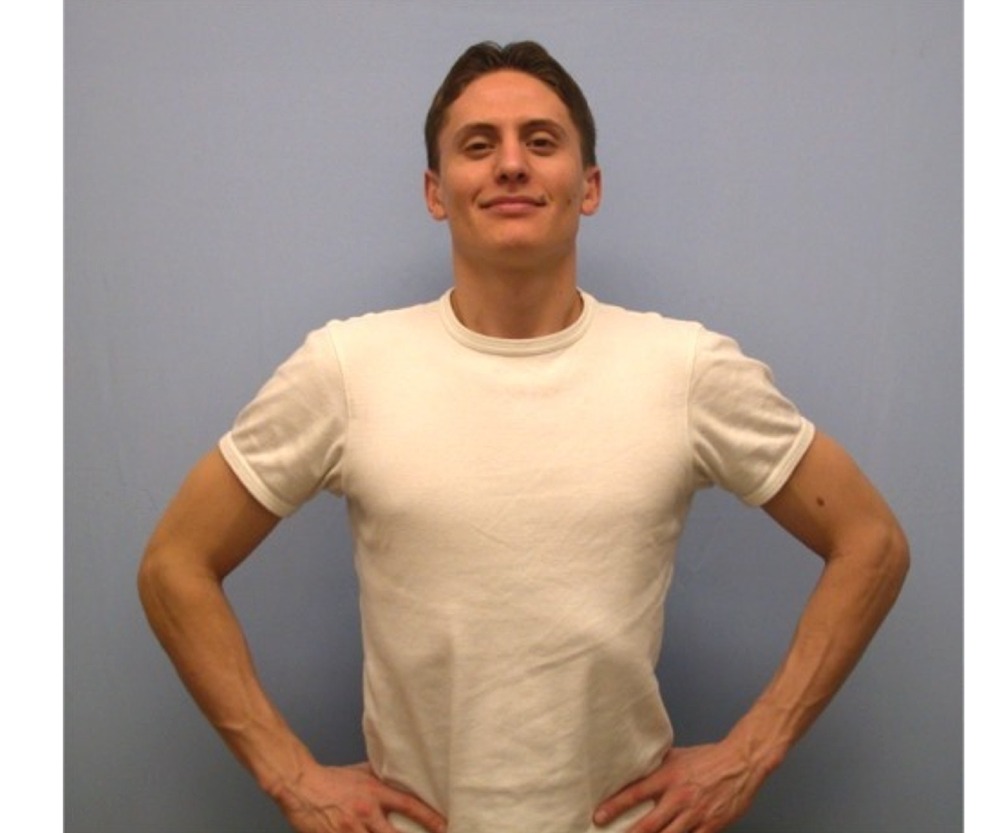 Much research has focused on the detection of emotion from expressions. This has been done by displaying an expression, say happiness and comparing it to anger to see if people understand the difference. This was a good first step in the study of nonverbal communication, but as the literature and field matures, more focus is being placed on the universal attributes of human bodily expressions as well as their overall meaning and purpose.
Take for example the expression of disgust. To an observer, it is readily observed in facial expression generally as a wrinkling of the nose. It signals to others that one should stay away as noxious elements are present. Likewise, the expression of anger with bared teeth and lowered brows tells other that aggression is immanent. These are two cases where avoidance is in order. However, when the mouth curls upwards and wrinkles form in the corners of the eyes, we recognize this is happiness, a positive emotion, which welcomes us closer. These are referred to as approach messages. The later, disgust and anger, are avoidance messages.
However, what does it mean when a person puts their hands on their hips, tilts their head back, and smiles modestly? Does the nonverbal expression of pride mean that we should approach or avoid?
New research by Azim F. Shariff and Jessica L. Tracy, University of British Columbia believe that pride is an approach related message that signals to others that they are worthy of “being the boss.”
The researchers believe that pride evolved as a universal signal of social status which gives important information to others in one’s social environment. Pride, they say, likely works in the maintenance and creation of hierarchy.
“In particular,” say the researchers in their paper published in the journal Emotion, “individuals who can effectively communicate that they deserve increased social status may be more likely to receive the benefits associated with high status, including access to scarce resources, increased influence, and higher quality mates.”
In turn, this outlines who in the group deserves higher status facilitating power maneuvering, cooperation and better social interactions including whom is worthy of social alliances.
No studies, up until this point have found evidence related to the nonverbal expression of pride with higher status, though, the researchers note several sources where people with higher status feel a greater sense of pride and where pride is a driving motivator to succeed.
Finally, during events likely to create pride, such as winning a battle against an opponent, cross-cultural evidence exists showing the existence of a specific nonverbal expression: expanded posture (chest thrust outward), arms up and head tiled back sometimes with a guttural vocalization. Noteworthy is the similarity between this human expression of dominance and that of nonhuman primates. This again supports the notion that displays such as these evolved to create and maintain status hierarchies.
This being the case, no empirical evidence exists, to date, has linked the expression of pride to higher status.
In total 6 studies were conducted to measure the expression of pride and to test its link to status.
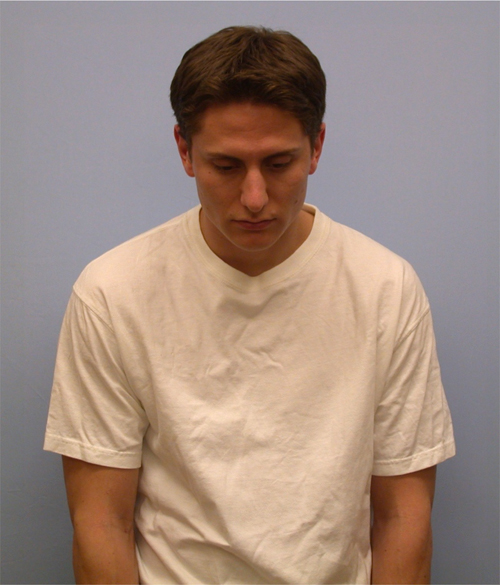 The first experiment compared the nonverbal expression of pride against shame and embarrassment. Shame and embarrassment expression likely serves to signal lower status so this first experiment tested the dichotomous expressions.
The experiment involved showing the expression of pride and shame to 20 undergraduate students. Presented were 3 variations of pride as well as 2 expressions of embarrassment and one variation of shame (as there is only one known reliable shame expression). These were created with the help of an actor.
The subjects were tasked with categorizing the images using words that represented high or low status. The high status words were dominant, important, powerful and prestigious and the low status words were humble, minor, submissive, unimportant and weak.
The results showed a strong association and reaction times when the pride expression were paired with high-status words than when pride was paired with low-status words.
This supports the notion that the expression of pride is linked to high status.
The seconds study was conducted much like the first except the pride expression was shown against expression of disgust, fear, and happiness.
The study also strengthened the hypothesis of pride as indicating higher status as the reaction times were faster when the words of status were matched with the expression.
The third study repeated the findings from the first two but only used the pride expression and measured how quickly response times were between matched words (high and low status). Again, when the words were matched, the response times were faster.
In the fourth study subjects sat at a computer screen where images were supraliminally (barely perceptible) presented with a sequence of images. First they were primed with an image showing pride for 75 ms, or in the control, a gray box. Afterwards they were shown a painting for 100 ms (supraliminally) followed by a “visual mask.” Next the subjects were asked to indicate if they felt the painting was “lower status than average,” or if they felt it was “higher status than average.”
The idea behind the study says that if pride expression is coupled, or “misattributed” with the painting then it would represent their real impressions of the expression by being coupled with it.
Once again, the results showed a strong association between the expression of pride and higher status.
In the fifth study, the expression of pride was coupled with expressions of happiness and anger and followed the same procedure as the first 2 experiments.
Strong associations emerged for pride and high status. When pride was coupled with high-status words, reaction times were faster. The results suggest that the pride expression is more strongly associated with high status than happiness expression even though both represent positive emotions.
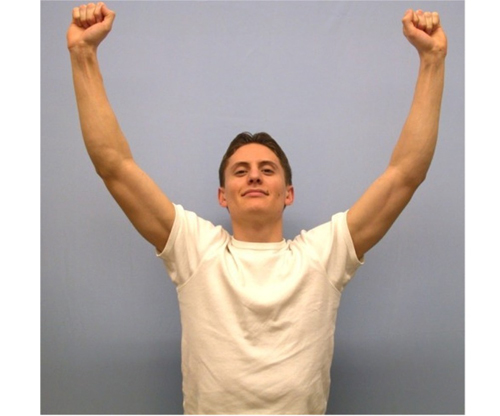
In the sixth study, the expression of pride was paired against images where the actor carried a neutral facial expression with his arms in three different positions of which display expansive postures unrelated to pride.
The results mirrored those from the other studies and show that it is not simple expansiveness that creates the expression of pride, but rather a specific posture.
 Discussing The Findings
The six studies indicate a strong association between the pride expression and higher status. Pride and high status was strong when coupled with high-status words as well as when compared against shame and embarrassment as well as disgust, fear and happiness.
While shame and embarrassment seem to be dichotomous when compared to pride, happiness does not naturally lead one in that direction since both pride and happiness are positive emotions that potentially signal people worthy of higher status.
Additionally, pride was compared to other expansive postures in which the actor extended his arms rather than made a arms akimbo postures. This shows that there is an inherent quality to the expression of pride not conveyed simply by expanding body size. This suggests that pride is expressed in a specific way with a combination of expanded body posture, head titled back, with arms extended. In other words, to create the expression of pride, it requires many specific cues in combination that are unlike other cues such as happiness.
Previous studies have shown that anger leads people to judge them as more qualified professionally speaking, however, in the current study, anger did not produce higher status than the pride expression itself. However, anger in comparison to sadness, likely has a more positive affect when creating power and competence.
As far as the anger expression goes, it may be read as power, but it may also show a “quick and dirty way” that someone is aggressive and therefore not worthy of approaching. Pride, on the other hand may signal status and competence, even success, therefore worthiness of approach and affiliation.
Participants had a difficult time inhibiting the association between pride and high status, thus suggesting that reading the signal is not something that is consciously controlled, bur rather inherently perceived.
The nonverbal expression of pride, even if done accidentally, or perhaps purposely, may elicit positive qualities inducing others to follow.
Resources
Shariff, Azim F. and Jessica L. Tracy. Knowing Who’s Boss: Implicit Perceptions of Status From the Nonverbal Expression of Pride. Emotion. 2019.9(5): 631-639.