
Which Faces Bluff Best In Poker?
Christopher Philip
The Current Study
Zero-sum games are games where on persons’ gains are another’s loss. These set of circumstances make them highly interesting to study.
In the current study, researchers led by Erik J. Schlicht Department of Psychology, Harvard University, Cambridge, Massachusetts, examined the effects of trustworthy, untrustworthy and neutral faces in a simplified version of the Texas Hold’em.
Unlike real poker, subjects were told they would not be able to bluff their way into winning a hand. Rather, they would make their decision to fold or call based on their start hand only, as well as the image of their opponent. They were not permitted to raise or bet. In fact, no other cards were to be dealt and no feedback provided along the way. In each case however, the opponent always bet randomly. The subjects were also always forced to be in the “big blind” which required them to put in an initial amount of chips.
The Results Of The Study
Results showed that threatening face information has little effect on wagering behaviour, but faces relaying positive emotional characteristics, that is, facial trustworthiness, made people take longer to make their decisions and they made more mistakes.
Differences in reaction times was more pronounced around the optimal decision boundary suggesting that faces mattered more during specific instances.
Overall, facial trustworthiness produced greater mistakes with respect to increased folding rates. This suggests that opponents, when nothing else was relevant, believed that the trustworthy faces were telling the truth about the strength of their hand.
Discussing The Findings
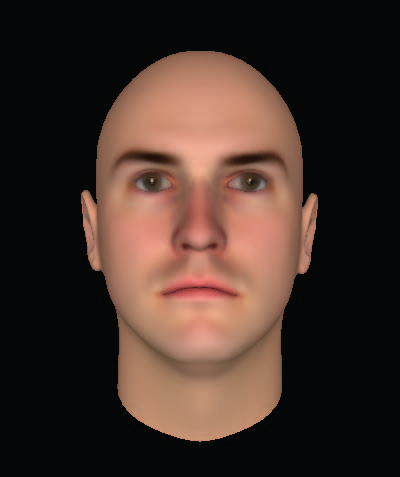
Untrustworthy
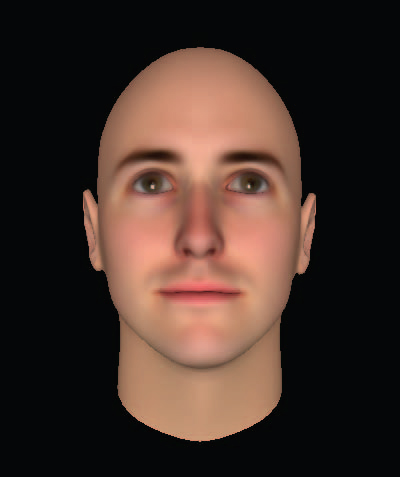
Trustworthy
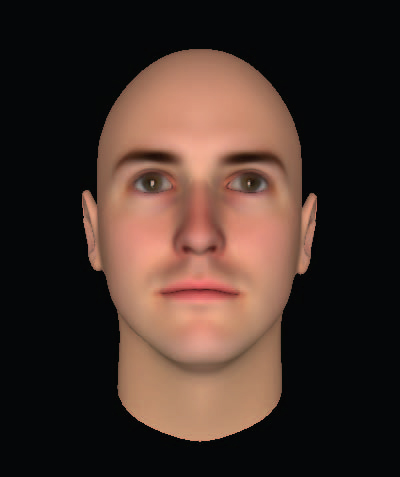
Neutral
The researchers say that “According to these results, the best “poker face” for bluffing may not be a neutral face, but rather a face that contains emotional correlates of trustworthiness — Moreover, it suggests that rapid impressions of an opponent play an important role in competitive games, especially when people have little or no experience with an opponent.”
The researchers suggest that common “avoidance cues” including dominant, angry and masculine led to more aggressive wagering decisions (increased calling), whereas “approach cues” such as happy, friendly, attractive and trustworthy led to conservative wagering (increased folding).
This is a rational approach, say the researchers, as approach cues signal to others honesty and suggests that the opponent really dose have a strong hand and is unlikely to be bluffing.
Drawing Conclusions
“Contrary to the popular belief that the optimal poker face is neutral in appearance,” say the researchers “the face that invokes the most betting mistakes by our subjects has
attributes that are correlated with trustworthiness. This suggests that poker players who bluff frequently may actually benefit from appearing trustworthy, since the natural tendency seems to be inferring that a trustworthy-looking player bluffs less.”
This is especially the case when opponents have little or no experience with one another which is the case early in the game or in one-shot negotiations. Likewise, facial morphology will predict how we make and ascribe trustworthiness during first impressions.
To learn more about decoding lying in people sign up for “How to be a Human Lie Detector.” The course is hosted by Vanessa Van Edwards but fully sponsored by Body Language Project.
Resources
Schlicht, Erik J.; Shinsuke Shimojo; Colin F. Camerer; Peter Battaglia and Ken Nakayama. Human Wagering Behavior Depends on Opponents’ Faces. PLOS one. July 2019. 5(7): e11663. doi:10.1371/journal.pone.0011663.g001
Want to learn more about body language quickly? Take a Video Course!